


Opening: the problem that motivates purchase decisions
Large facilities lose time and money when assets vanish from view. Active RFID tags solve long-range visibility and regular telemetry, but only when readers and system planning match the tags’ capabilities. To pair active tags correctly with your infrastructure, evaluate how they will work with existing hardware such as UHF RFID Readers, your wireless backbone, and your data platform. This guide focuses on real selection problems, and gives stepwise choices to avoid expensive mismatches.
Problem diagnosis: what specific issues are you solving
State the problem precisely. Need to detect moving pallets across a warehouse bay? Need continuous temperature monitoring of refrigerated trucks? Need multi-hundred-meter range to track containers in a yard? Each task imposes different constraints: read range, battery life, payload data, and environmental ruggedness. A wrong assumption here—such as treating battery life as secondary—creates failure later, when tags stop reporting midway through a shift.
Tag selection: concrete factors to compare
Compare these measurable attributes, not marketing claims. Radio frequency and output power determine raw range. Battery chemistry and transmit interval determine life in months or years. On-board sensors (temperature, vibration) determine data usefulness. Enclosure IP rating determines survivability in rain or wash-down. Choose tags where the manufacturer specifies test conditions (antenna gain, transmit interval) so you can extrapolate to your deployment. Keep spare units for field trials; lab specs rarely match factory floors.
Reader deployment and a real-world anchor
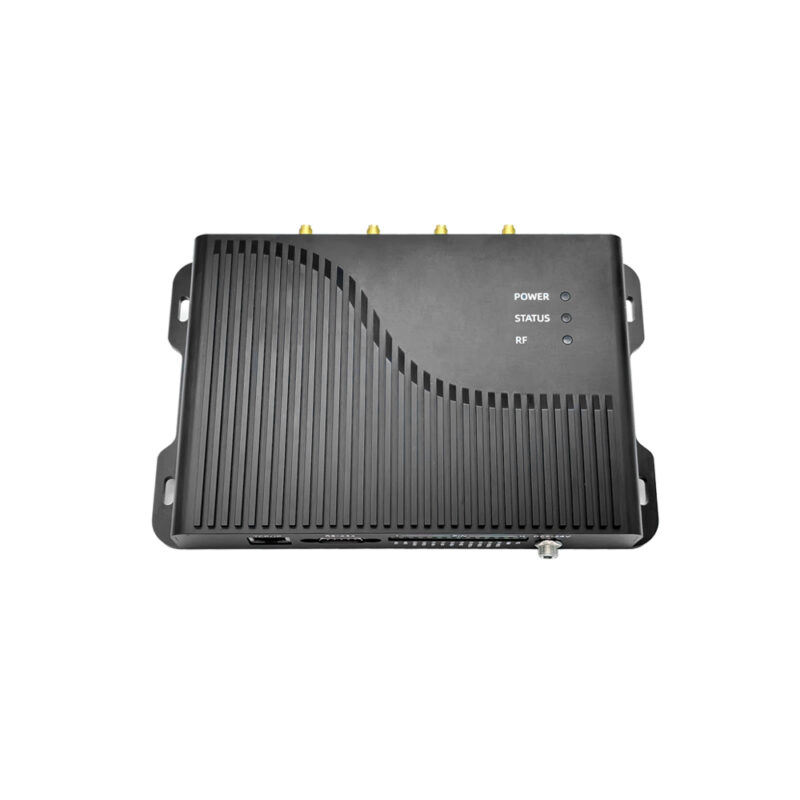
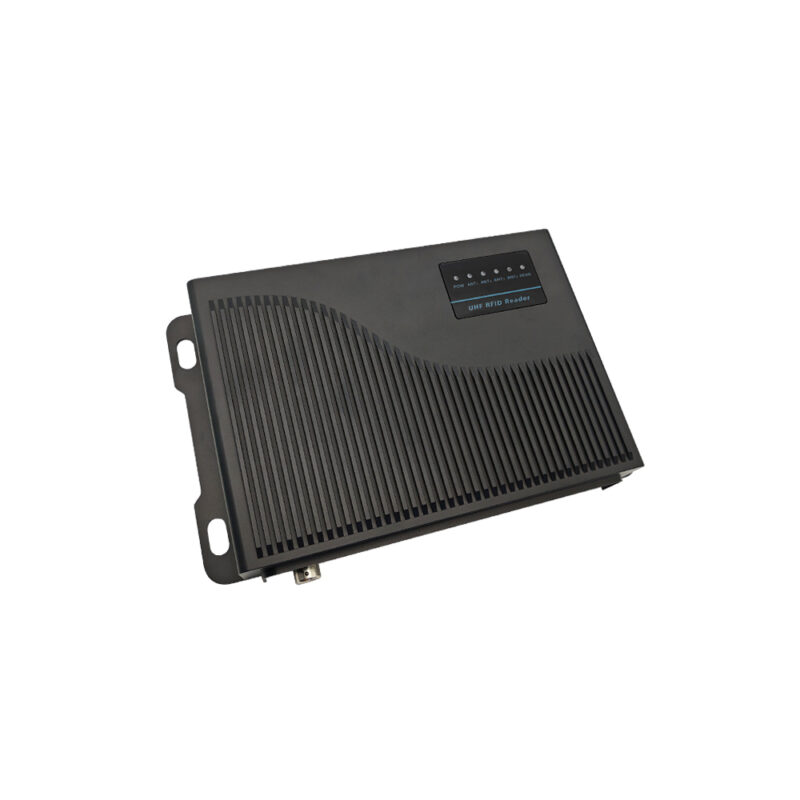
Reader placement is decisive. Fixed readers must cover choke points and avoid reflective interference from metal racks. Pilots at the Port of Los Angeles showed container tracking improves only after antenna gain, mounting angle, and reader spacing were tuned to site conditions; those pilots used fixed uhf rfid reader deployments to validate patterns and reduce missed reads. Study such examples and validate with on-site tests before full roll-out: tag and reader must be matched under real loading, not only in the spec sheet. The physical link must be robust; cabling, PoE planning, and grounding matter.
Common pitfalls and how to avoid them
Do not accept blanket claims of “long range” without context. Test with the real load: pallets, forklifts, stacked materials. Avoid underpowering the reader network; coverage holes appear when you assume a single reader will suffice. Do not ignore firmware and antenna tuning; many problems are resolved by adjusting antenna polarization or lowering power to reduce collisions. Plan maintenance: battery replacement cycles, tag registration procedures, and firmware update paths. Finally, design for data: tag reads are meaningless unless identifiers map to business records in your database.
Alternatives to consider and when they fit
Passive UHF tags fit when cost per item is critical and occasional reads at choke points suffice. BLE beacons fit when smartphone integration and proximity signaling matter. GPS fits where open-sky, continuous global location is required, but it consumes far more power and often fails indoors. Choose active RFID tags when you need consistent, autonomous reporting over medium to long distances and when on-tag sensors add operational value.
Practical purchasing checklist
Use this list during vendor evaluation. 1) Define required read range and testing conditions. 2) Specify minimum battery life under your reporting interval. 3) Require environmental ratings: temperature range and IP code. 4) Ask for field test logs or case studies showing similar deployments. 5) Verify firmware update process and tag identity security. 6) Confirm return and warranty terms for battery failures. 7) Validate compatibility with your reader models and antenna types. Make vendors demonstrate a working end-to-end read in your environment before bulk purchase.
Synthesis and recommended next step
Decide by comparing measured outcomes, not glossy brochures. Start with a small, representative pilot; measure read rates, battery drain, and integration effort. If your pilot aligns with expected metrics, scale the deployment with clear maintenance schedules and spare inventories. When sourcing components and technical support, consider suppliers that document product tests and assist with on-site validation, such as RSTC, which often provides practical deployment advice alongside hardware options.
