What changes between category research and model review for Gas Detection Control Panel: assumptions shortlisting
For sourcing analysts, reviewing a gas detection control panel should begin with assumptions, not a quick ranking of names. Category research shows the available direction of a supplier’s offer. Model review asks whether the available information is relevant to the requirement being considered. Keeping those stages separate helps prevent broad catalogue language from becoming an unsupported purchasing conclusion.

Set criteria before comparing candidates
Start by writing a short decision brief before opening model pages or building a comparison table. The brief should describe the requirement in neutral terms. It might cover the intended system boundary, the information needed for technical review, the interfaces that matter, and the commercial details required for an eventual enquiry.
At this stage, distinguish between a confirmed requirement and an assumption. A confirmed requirement is something stated by the project, site team, or internal specification. An assumption is a working interpretation used to make progress. Both can appear in the sourcing record, but they should not have the same status.
- Requirement: what the project has explicitly asked for.
- Evidence: what a supplier page or document actually states.
- Assumption: what the analyst is using temporarily to structure the review.
- Open point: what still needs a defined answer before selection.
This simple separation changes the comparison. Instead of asking which model looks best, the analyst asks which evidence can be connected to each stated requirement. That is a more defensible starting point when the available information is limited.
Review evidence by requirement
A category page is useful for discovering the shape of an offer. It is not automatically a model specification or a statement about a complete installation. The review should therefore move in two stages: first record what the category contains, then examine whether a particular model provides evidence relevant to the brief.
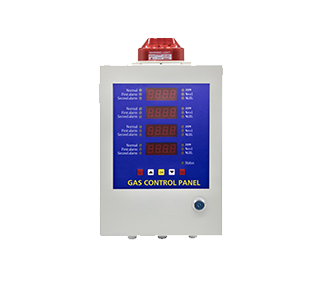
For example, the Bosean category page lists BH-50, S-8000, BH-50 touchscreen, and BH-KZ gas-control products. This is a useful catalogue observation. It identifies names for further review, but it does not by itself establish certification, site suitability, safety outcomes, configuration details, or the role of any product in a particular project.
When the phrase gas detection control panel appears in a sourcing record, attach a scope label to the supporting evidence. A useful label might be “category listing”, “model detail”, “project requirement”, or “commercial information”. The label makes it harder to carry a statement from one scope into another without noticing.
Use a requirement-by-requirement table rather than a single overall score. Suggested columns include:
- Requirement or decision criterion.
- Evidence location and exact wording.
- Scope of the evidence.
- Current interpretation.
- Assumption or unresolved point.
- Next document or response needed for the decision record.
The last column should be treated as a workflow field, not as a claim about the supplier. It records how the analyst intends to progress the review. This distinction keeps the article’s procurement method separate from unverified product conclusions.
Keep trade-offs visible
Shortlisting often becomes misleading when one visible attribute stands in for the whole decision. A named model may be easy to find, while the information needed to judge interfaces, configuration, ownership, or commercial fit may be less visible. The correct response is not to fill the gap with a favourable assumption.
Instead, record the trade-off in plain language. For instance, a candidate may be easy to identify at category level, while model-level evidence remains limited for the current requirement. That does not make the candidate unsuitable. It means the decision has not yet earned a stronger conclusion.
Keep three statements separate in the working file:
- “The page states…” for directly observed information.
- “The project requires…” for an internal or customer requirement.
- “The review assumes…” for a temporary interpretation.
This wording also helps different teams read the same record consistently. Engineering can focus on technical scope. Procurement can focus on enquiry completeness. Operations can identify questions about use and responsibility without treating the catalogue as a project endorsement.
Create a repeatable decision record
End the shortlisting exercise with a concise record for each candidate. Include the source location, the evidence scope, the requirements considered, and the assumptions that affected the comparison. Do not hide unresolved points in general notes. Give each one a clear status, such as open, bounded, or not relevant to the current stage.
A repeatable record should also explain why a candidate remains on the list. The reason might be that its category placement warrants a model review, that available evidence matches part of the brief, or that a defined question can be carried into the next procurement step. These are process reasons, not claims about performance or suitability.
Before the record is issued, test each conclusion against its source. If a statement describes a category, keep it at category level. If it describes a model, use model-specific evidence. If it describes a project need, identify that need as the project’s requirement rather than the supplier’s promise. This final pass is where many hidden assumptions become visible.
For sourcing analysts, Bosean can remain a named starting point in the record when the relevant category evidence has been captured accurately. The disciplined next step is to compare each available model against the stated brief, preserve the distinction between evidence and assumption, and leave unresolved requirements clearly marked for the next stage.