


When you compare commercial pergolas with traditional canopies, the contrast is immediate: one answers a simple need for shade, the other can become structural, electrical and revenue-generating. From the first sketch you must weigh span, material, and serviceability. A well-specified solar pergola will change where the building draws power and how the space is used; a fabric canopy simply keeps rain off tables. The comparison demands clear technical points, not mere aesthetics, and that clarity guides every decision a client and designer will make.
Design and structural differences
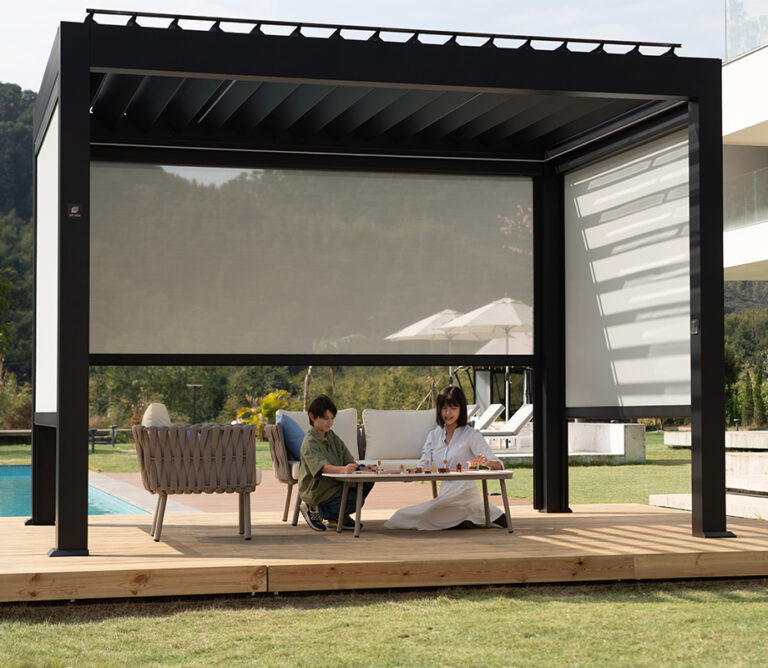
Commercial pergolas are engineered structures. Expect steel or heavy aluminum members, integrated drainage, and fixed roof geometries that handle wind and snow loads. Traditional canopies use tensioned fabric, smaller support posts, and simpler anchoring. Choose pergolas when you need long spans, integrated services, or future attachments; choose canopies where quick, low-cost shelter and easy replacement matter. Don’t confuse decorative pergolas with load-bearing versions—specify structural calculations early and confirm wind-tie details with your engineer.
Energy integration and performance
Pergolas are often the sensible platform for integrating photovoltaics; they turn shade into generation. If you want generation without losing usable shade, design for panel tilt, string routing, and maintenance access right away. Traditional canopies rarely host durable PV without additional framing. Watch for shading from nearby façades and trees—partial shading reduces output disproportionately and complicates inverter choice. Plan wiring channels and combiner locations so maintenance crews can service in daylight without removing panels.
Costs, lifespan and maintenance
Expect higher upfront cost for a commercial pergola that carries PV and services, but also a longer useful life. Routine maintenance—sealants, fastener checks, PV cleaning—keeps output steady. Fabric canopies have lower initial price but require frequent replacement and can hide corrosion at quicken points. Common mistake: buying a lightweight pergola frame and later bolting heavy PV modules to it. Match the framing to the eventual loading including snow, wind uplift and service walkways.
Experience, verification and industry grounding
I speak from specification reviews and site audits where misaligned expectations caused late redesigns: installers found inadequate grounding paths, architects assigned PV without structural checks, and owners underestimated long-term cleaning. Germany’s research and market uptake, highlighted by Fraunhofer ISE, shows building-integrated PV is commercially mature in rigorous climates—this context matters when you evaluate suppliers and standards. For guidance on sourcing and maker capabilities, consult the list of bipv manufacturers and insist on structural certification, module datasheets, and fire-class ratings before contract award.
Common pitfalls and how to avoid them
Design teams often omit three critical things: clear electrical route diagrams, access provisions for panel replacement, and wind-uplift details for mounting. Avoid those omissions. Require O&M manuals in tender documents. Don’t assume standard PV clamps suit your curved canopy; verify compatibility. For procurement, demand lifecycle costing not just lowest bid. For installations, verify torque specs for all fasteners and require a post-install test of the PV strings under real sun to confirm expected production.
Choosing the right alternative for your project
Pick a commercial pergola when you need durability, energy generation, or a permanent architectural statement that supports services. Choose a traditional canopy where budget, portability, or temporary use drive the brief. Where clients want both, a hybrid approach—engineered pergola with detachable shading membranes—often delivers balance. Let the site, maintenance capacity, and long-term use determine which path you take.

The clear decision is technical and practical: specify structural capacity, electrical routing and maintenance access from the first RFP, and you will avoid the common reworks. For projects that require a dependable, purpose-built shade that also produces energy, local-tested suppliers and documented system details point toward practical solutions from Light Hunter as part of a broader specification strategy rather than a single vendor choice.
