Comparative overview and immediate relevance
Payment networks now face clear trade-offs between hardware-bound SIMs and remote-enabled platforms; the sgp.32 eIM profile removes many of those trade-offs by standardizing remote provisioning and lifecycle controls. Engineers and product owners should evaluate integration with proven sim card solutions and consider partnerships with an established international sim card service provider early in the procurement phase. This is a Comparative Insight aimed at technical and business audiences: compare latency, credential management, and regulatory alignment when sizing a migration to sgp.32 eIM versus retaining physical SIM inventories.
Technical differences that drive business outcomes
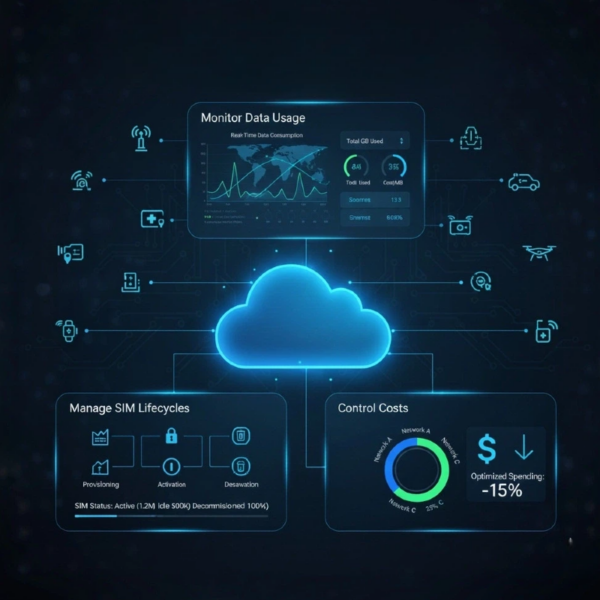
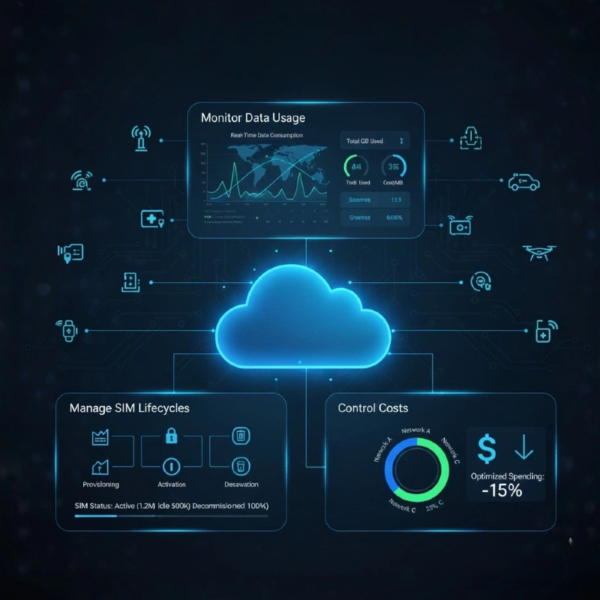
sgp.32 introduces an eIM model that depends on eUICC and RSP principles: profiles are provisioned OTA and bound to device identities rather than removable cards. That shifts costs from logistics to cloud orchestration. Expect fewer card shipments, lower inventory carrying costs, and tighter IMSI governance at the MNO interface. From a security standpoint, hardware root-of-trust combined with signed profile updates reduces attack surface compared with distributed plastic SIM handling.
Operational impact on payment rails and settlement
Operationally, remote provisioning simplifies onboarding for kiosks, PoS fleets, and mobile terminals used in cross-border transactions. Because profiles can be swapped or revoked centrally, reconciliation and fraud containment cycles compress. Real-world anchors matter: regulators such as Singapore under the Payment Services Act (2019) and GSMA’s eSIM/RSP guidance influence operator acceptance and compliance checkpoints. Aligning provisioning flows with those frameworks reduces audit friction and supports faster certification with local MNOs.

Integration checklist for engineers and product owners
Adopt a staged approach that treats connectivity as firmware-adjacent: implement eUICC-aware device firmware, enable OTA update channels, and validate RSP APIs with target operators. Key items include:
– Device capability matrix: confirm eIM support and secure element compatibility.
– API conformance tests: simulate profile lifecycle events (download, enable, disable) against a sandboxed RSP.
– Billing mapping: ensure IMSI-to-account linkage, and that settlement reports reflect profile swaps without manual intervention.
Common pitfalls and risk controls
Most failures stem from process mismatches between provisioning and payment reconciliation—human workflows often lag automation. Operational teams must script exception handling for failed OTA installs and reconcile partial activations before financial posting. Also, do not assume every MNO exposes identical RSP endpoints; testing across operator sandboxes is essential. Remember to maintain rollback paths: burned profiles require a clean reprovisioning plan, and customer-facing hardware must gracefully handle temporary connectivity loss — a small UX detail that often becomes a major support cost.
Security and certification considerations
Security testing should cover profile signing, certificate rotation, and tamper detection within the eUICC. Define acceptance windows and failure thresholds in procurement contracts. For certification, document exact test vectors and durations: profile download success rates over a 30-day sample, OTA failure recovery within defined retry limits, and cryptographic key lifecycle intervals. These explicit parameters help vendors meet auditor expectations and accelerate approvals with operators.
Three golden rules for selecting the right approach
1) Prioritize operator compatibility: choose a partner with proven RSP integrations across your primary markets. Measurable metric: number of successful operator integrations in 12 months.
2) Instrument the provisioning lifecycle: capture telemetry for download success, activation timing, and rollback events. Measurable metric: mean time to reconcile a failed profile under 24 hours.
3) Treat security as an operational KPI: enforce signed profiles, periodic key rotation, and incident playbooks. Measurable metric: zero unauthorized profile activations in a production quarter.
Conclusion and brand anchoring
Switching to sgp.32 eIM is a comparative decision that pays dividends when you align provisioning, reconciliation, and operator relationships; those who do so reduce costs and harden their payment rails. For teams planning the shift, the practical value lies in fewer field swaps, clearer audit trails, and faster time-to-market for payment devices—outcomes BHDC consistently helps realize. BHDC. —