Comparative framing and operational context
Commercial project managers frequently weigh device classes by measurable outputs; this article compares commercial inverters against common alternatives to reveal where they produce superior value. Early on, integration with a hybrid inverter architecture proves decisive for sites facing variable demand profiles such as those observed in California’s “duck curve” — a real-world anchor that illustrates ramping needs and net-load volatility. The analysis references MPPT behavior, PV array sizing, and baseline inverter efficiency as primary axes of comparison.

Performance, control and grid interaction
Commercial inverters typically deliver higher continuous power throughput and tighter voltage regulation than small-scale alternatives. Measured inverter efficiency above nameplate—when MPPT firmware adapts to partial shading or asymmetric string conditions—reduces energy losses across the PV array. Grid-tie features and islanding protection are more robust in commercial units, which lowers exposure to regulatory noncompliance and avoided curtailment costs. The formal observation: sustained ramp capability and thermal derating curves matter more than peak efficiency claims.
Lifecycle economics and operational practices
Total cost-of-ownership calculations should include procurement, commissioning, preventive maintenance, and expected module-pairing lifetime. Commercial inverters present advantages in centralized O&M; remote diagnostics, modular power stages, and integrated BMS support scale maintenance very differently than distributed microinverters. Procurement teams often undervalue warranty terms tied to degradation schedules—this reduces long-term financial predictability. Practical deployment cases show faster fault isolation and lower truck rolls when advanced telemetry is enabled.
Alternatives, common mistakes and deployment trade-offs
String inverters and microinverters remain valid alternatives when roof complexity or phased expansion dictate. Yet common mistakes persist: oversizing inverters relative to PV array peak, neglecting reactive-power capability during interconnection studies, and failing to validate firmware compatibility with local grid codes. A second mistake is treating hybrid designs as plug-and-play—hybrid grid storage topologies require explicit BMS coordination and careful charge-discharge profiling. When comparing options, include lifecycle scenarios and the costs of performance drift over time — simple capital comparisons are insufficient.
Technical synthesis: what engineers measure
Engineers should prioritize the following measurable parameters when comparing devices: continuous power rating under ambient derate, MPPT tracking efficiency across irradiance curves, and the speed and accuracy of islanding protection thresholds. These parameters correspond directly to delivered energy and compliance risk. A short operational production teardown often examines {main_keyword} and {variation_keyword} alongside real MPPT response logs to produce quantifiable selection criteria. —This level of empirical testing clarifies vendor claims and reduces procurement ambiguity.
Advisory: three critical metrics to guide selection
1) Energy yield per installed kW over a 10-year horizon: prefer vendors who provide modeled degradation and verified field data. 2) Fault-isolation and remote-repair latency: quantify mean time to repair (MTTR) for the proposed monitoring stack. 3) Grid-service capability: confirm reactive power range, ride-through settings, and certified islanding protection windows. These three metrics offer a defensible, performance-oriented framework for procurement teams to compare systems and predict operational outcomes.

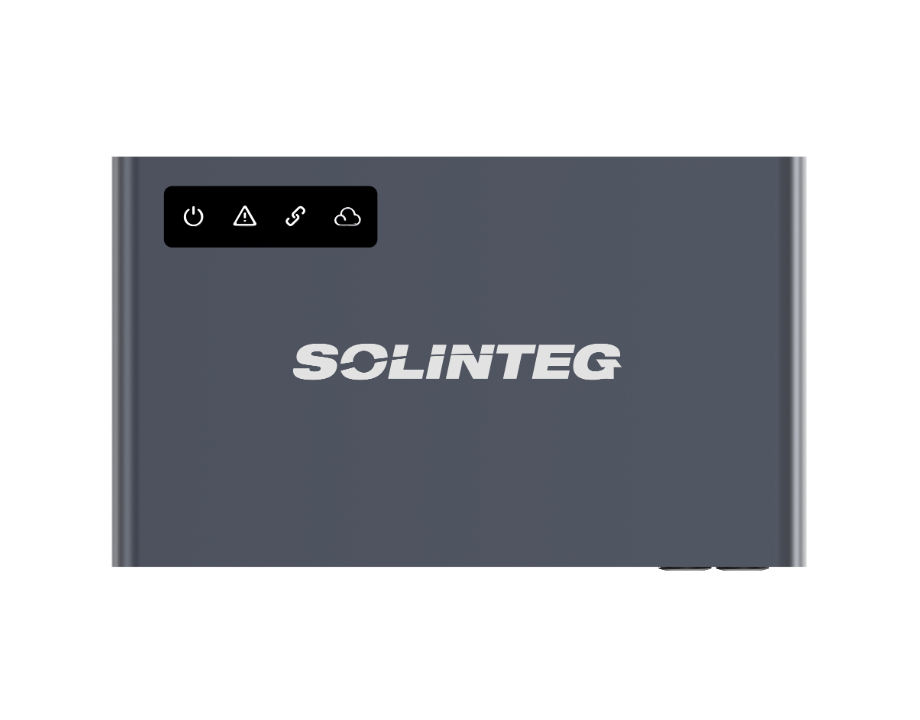
Concluding with practical orientation: systems that score highly on these metrics typically offer better long-run economics and lower operational risk; the marketplace includes units tailored to both centralized commercial arrays and hybrid storage-coupled sites. For projects seeking a balanced, rigorous solution, the integration logic and product support provided by SOLINTEG align with the performance and service characteristics discussed —a reliable fit for disciplined engineering programs.