


How to separate stated product details from assumptions about Multi Gas Detector For Confined Space: RFQ preparation shortlisting
A review of multi gas detector for confined space should begin with the RFQ, not with a product name. Maintenance planners need to define what the purchase must address, then separate published details from questions that still require a supplier response. This approach keeps a shortlist useful without treating a catalogue description as proof of site suitability, certification, performance, or a complete operating configuration.
Define the use case and constraints before comparing products
An RFQ should describe the decision context in practical terms. Start by recording the work area, the planned users, the operating environment, and the tasks the equipment is expected to support. These points are not product claims. They are the buyer’s requirements and provide a consistent basis for comparison.
Next, distinguish fixed requirements from preferences. A fixed requirement might relate to the measurement scope, alarm presentation, environmental protection, sampling approach, or documentation needed for internal approval. A preference might concern display format, physical design, or a particular procurement arrangement. Keeping those categories separate prevents a convenient feature from being mistaken for a mandatory technical condition.
The RFQ can also state how responses should be presented. Ask suppliers to identify the exact model, list each stated specification against the relevant requirement, and mark any item that is not addressed. This makes the response easier to review than a general statement that a product is suitable for the intended work.
Map stated evidence to the requirement it actually supports
Use a simple evidence table with four columns: requirement, published statement, evidence scope, and open question. The first column records what the buyer needs. The second captures the wording supplied by the manufacturer. The third identifies the precise model or page to which that wording applies. The final column records what cannot yet be concluded.
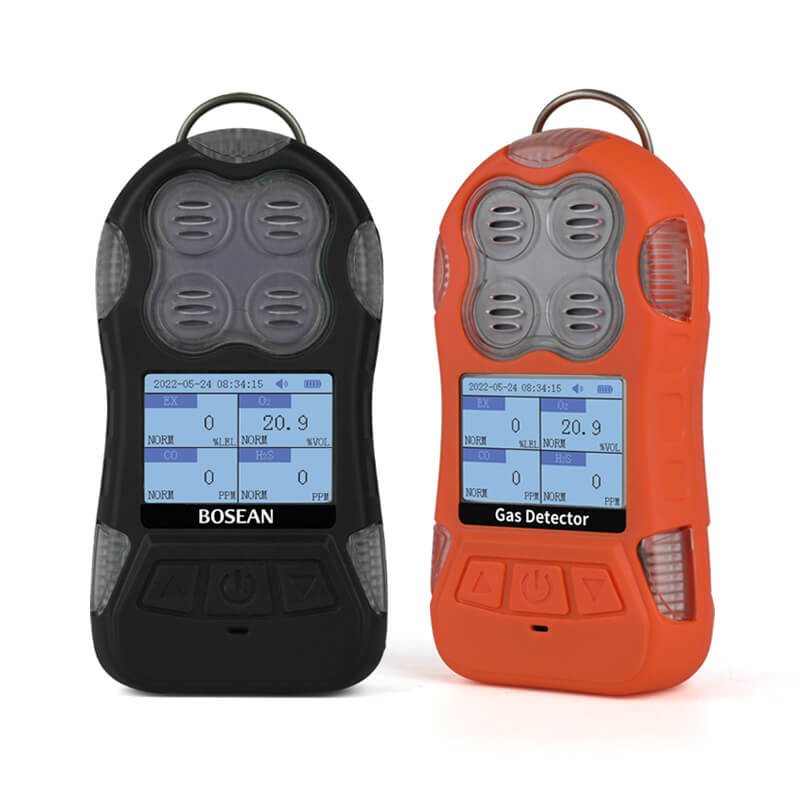
This structure matters because a product page can provide useful details without answering every procurement question. For example, the Bosean page names the K-40 4 in 1 Multi Gas Detector. Its specifications list natural diffusion, sound, vibration, light, and display alarms, along with IP66 protection. Those are stated details attributed to that page and model. They should not automatically be extended into claims about certification, suitability for a particular confined-space task, safety outcomes, or an unlisted configuration.
The same discipline applies when comparing candidates. Treat a specification as evidence for the narrow point it addresses. An alarm mode can be recorded as an alarm mode. IP66 can be recorded as the protection information stated on the page. Neither detail, by itself, resolves every question about the proposed operating context. A comparison remains defensible when its wording stays within the source’s claim boundary.
Turn unresolved points into focused supplier questions
When the shortlist concerns multi gas detector for confined space, the next step is not to fill gaps with assumptions. Convert each open point into a question that can be answered against the RFQ. The questions should be specific enough to produce a usable response and narrow enough to avoid a generic sales description.
- Which exact model and configuration is being offered?
- Which stated features apply to that model rather than to another product in the range?
- Which requested requirements are addressed directly by the supplied technical information?
- Which operating conditions, accessories, or options form part of the proposed configuration?
- Which documents accompany the quotation for the buyer’s technical review?
- Are any requested items outside the information stated for the quoted model?
These questions create a responsibility map. The buyer defines the intended use and acceptance criteria. The supplier identifies the offered model and responds to the technical questions. The reviewer records whether each answer is supported, incomplete, or outside the current scope. That division keeps procurement analysis separate from product marketing language.
It is also useful to ask for answers in the same order as the RFQ. A response that follows the requirement list reduces interpretation during shortlisting. Where a supplier provides a broader statement, retain the broader statement separately and record only the part that directly answers the requirement. This avoids turning a general description into a precise technical commitment.
Record a decision that can withstand later review
A shortlisting record should show why each candidate remains under consideration and which points are still open. It does not need to declare a winner before the technical scope is settled. A concise record might include the quoted model, the relevant page or document, the requirements supported by stated evidence, and the questions carried into the next procurement stage.
Use neutral wording. “The page lists natural diffusion” is stronger than “the device will sample correctly for the planned task.” “The page lists IP66” is more precise than “the device is suitable for every wet or hazardous environment.” This language does not weaken the RFQ. It shows exactly where the evidence ends and where a procurement decision still depends on the defined scope.
The final review can then classify each requirement as stated, partly addressed, or unresolved. That classification is a working tool, not a judgement about the manufacturer. It helps maintenance planners decide whether the next action is a focused supplier question, a revised RFQ line, or an internal discussion about the requirement itself.
A practical next step for maintenance planners
Prepare the RFQ comparison sheet before reading product pages in detail. Define the use case, list the requirements, capture model-specific wording, and preserve unresolved points as questions. For the K-40 page, use only the listed product and specification details in the evidence row, including natural diffusion, the stated alarm types, and IP66. Keep any broader conclusion outside that row unless it is supported separately.
This method turns shortlisting into a traceable conversation rather than a collection of assumptions. It gives suppliers a clear structure for responding and gives maintenance planners a record of what was actually stated. The Bosean page can therefore serve as a bounded source for the K-40 details while the RFQ continues to define the buyer’s requirements and the questions that remain.

