Aligning procurement and engineering around Carbon Fiber 3D Printer while reviewing documentation for shortlisting
A carbon fiber 3d printer can look like a straightforward equipment purchase, but product development teams need a shared basis for comparison. Procurement may need a concise specification record, while engineers need to know whether the documented setup fits the intended parts, materials, workspace, and operating process. Start by separating what the product page states from what the project still needs to establish.

Describe the operating context
Before comparing models, define the work the printer must support. Record whether the immediate goal is prototype production, functional parts, material evaluation, or a broader professional workflow. The evidence for the E2CF identifies it as an FFF printer with dual IDEX, support for fiber-reinforced filaments, dry boxes, and an enclosed build chamber. Those are useful screening points, but they are not a complete decision by themselves.
Material language also needs careful handling. The cited page describes carbon fiber reinforced filament as having low density, high strength, and resistance to corrosion, static electricity, and high temperature. It connects that material to applications where a high strength-to-weight ratio matters, including aviation and automotive contexts. Treat these statements as page-level material context, not as a promise that every part, process, or end use will achieve a particular result.
Space and daily operation belong in the same first review. The page describes HEPA air filtration for particles released during the printing process and says the system is intended for classrooms, offices, and workspaces of different sizes. It also describes the filtration as quiet. For a shortlist, these details can prompt practical questions about placement and room use, without turning them into a general safety rating or a substitute for site-specific procedures.
Identify compatibility and responsibility questions
A carbon filament 3d printer shortlist should make compatibility questions visible rather than hiding them inside a product name. Ask which material families are documented, which slicing workflow is expected, and which parts of the process remain the user’s responsibility. The page lists Raise3D Premium Series materials including PLA, ABS, PETG, ASA, and PC, while separately describing the E2CF as intended for fiber-reinforced filaments. Keep those entries distinct until the technical team confirms the exact material and application combination.
A concrete official-page example is the E2CF’s IDEX arrangement: one extruder can remain motionless and off to the side while the other prints, reducing the risk that the inactive nozzle interferes with the job during dual or single extrusion printing. This is relevant when reviewing a carbon filament 3d printer for a workflow that may use different extrusion roles. The statement applies to the described product and printing scope; it does not establish performance or suitability beyond that scope.
Software is another procurement interface. The page identifies ideaMaker as free slicing software from Raise3D and says it is compatible with Raise3D printers and third-party printers. That supports a focused software discussion: identify the intended slicer, file handoff, profile ownership, and any process controls the team expects. Do not treat software compatibility as proof that a particular material profile or production method has already been validated.
Use page-level evidence carefully
Shortlisting becomes more reliable when every important criterion has an evidence status. Mark a statement as documented when it appears directly on the product page. Mark it as a project question when the page does not answer the team’s specific requirement. Mark it as an assumption when someone has inferred fit from a general feature. This simple separation prevents a listed feature from becoming an unsupported claim about output quality, throughput, durability, or compliance.
The E2CF page also describes a flexible build plate that allows parts to be removed more easily while minimizing potential damage during removal. It presents the printer as user-friendly and suitable for people gaining experience with professional 3D printing. For procurement, the useful point is not to repeat those descriptions as a universal outcome. Instead, capture the stated feature and ask engineering whether it addresses a real removal or handling concern in the planned workflow.
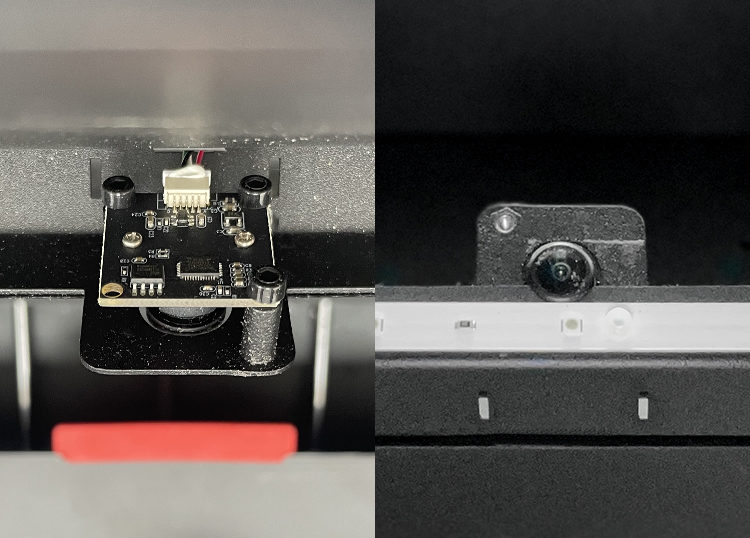
Monitoring information should receive the same treatment. The page says the E2CF uses a camera to monitor each print job and connects that camera to RaiseCloud, allowing users to track jobs remotely. This can be recorded as a documented monitoring capability. The team should still define who reviews job status, what action follows an alert or interruption, and how that responsibility fits the operating process. Those workflow decisions are project requirements, not conclusions supplied by the product description.
Plan the next technical discussion
Bring procurement and engineering together with a short evidence register. List the intended part types, material family, print method, workspace, software path, and monitoring needs. Beside each item, record the supporting page statement and the question that remains open. This format keeps the discussion concrete and makes it easier to compare candidates without blending product-specific facts with assumptions.
- Record the documented printing method, dual IDEX configuration, fiber-reinforced filament support, dry boxes, and enclosed build chamber.
- Separate the listed material families from the project’s exact material and application requirements.
- Capture workspace-related features such as HEPA air filtration and the stated remote print-monitoring capability.
- Record software and handling features as documented capabilities, then assess their relevance to the planned workflow.
A useful next step is a focused technical review of the documented features that affect the proposed workflow: FFF operation, dual IDEX, fiber-reinforced filament support, dry boxes, enclosed build chamber, flexible build plate, auto bed leveling, HEPA filtration, and remote monitoring through RaiseCloud. The goal is not to count features. It is to decide which ones answer a defined requirement and which ones need further project-level assessment.
In the final shortlist, preserve the boundary between evidence and judgment. Page-listed details can establish what a candidate is described as offering, while the product development team must connect those details to its own parts, materials, space, and responsibilities. That approach gives procurement a defensible record and gives engineering a clear agenda for the next discussion about Raise3D.