What matters to the people on the floor
Maintenance managers, line supervisors and parts coordinators all want the same thing: steadier throughput and fewer last-minute holds. The best fixes are rarely headline-grabbing; they are pragmatic changes to layout, control software and handling gear. That’s where material handling automation and automation robotics warehouse logistics come in — not as a one-off project but as modular tools that stop bottlenecks at source. The pandemic in 2020 exposed how brittle just-in-time chains can be, so teams now prioritise predictable cycle time and resilient stocking over fanciful tech demos. Expect quicker returns from solutions that align with daily operational constraints rather than theoretical maximums. (WMS and AGV fit into that practical picture.)
How the technology eases everyday pain
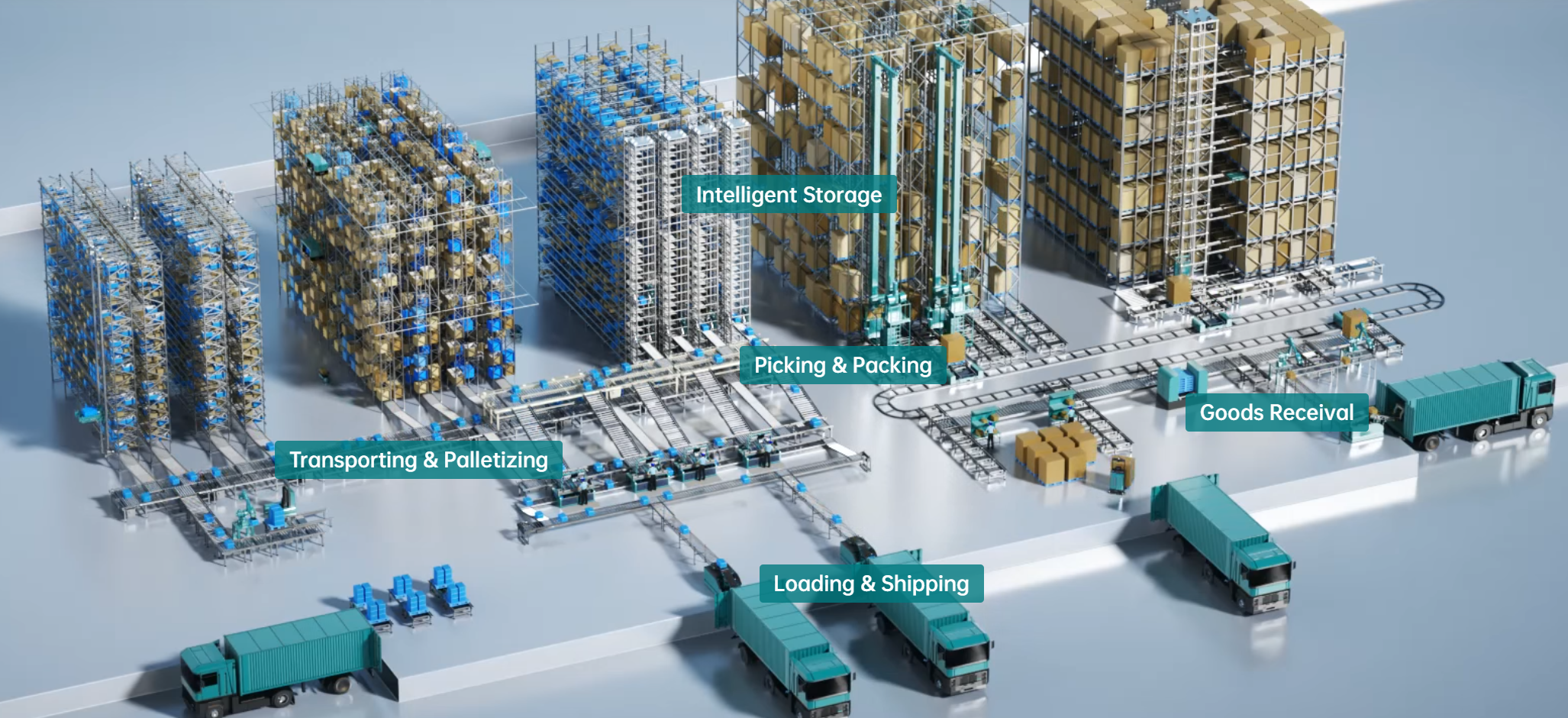
Start with clear weak points: inbound sorting, kitting for sub-assembly and outbound sequencing for line-side delivery. Automated guided vehicles (AGV) reduce touchpoints; automated storage and retrieval systems (AS/RS) reclaim aisle space and cut search time; pick-to-light and conveyors smooth short runs. These are not replacements for people — they are extensions. A small AS/RS can halve search and retrieval labour for slow-moving SKUs, while a simple WMS rule-set reduces mis-picks immediately. You’ll see the benefits fastest where inventory accuracy was previously the constraint — and measurable gains show up as fewer line stoppages and reduced overtime.
Design choices that actually pay off
The most frequent success comes from an incremental approach. Choose modular units and phased rollouts: begin with a single cell (a conveyance loop, an AGV route or a small AS/RS bay) and instrument it. Track three KPIs from day one — throughput, pick accuracy and mean time between failures. Integration matters: a WMS that communicates in real time with PLCs and robots lowers cycle latency and avoids manual reconciliation. Avoid over-complex customisations early on; they balloon commissioning time and frustrate operators. Keep spare parts accessible and document simple fault trees so technicians can recover systems quickly — this reduces downtime and keeps production humming.
Common mistakes and how to sidestep them
Teams often push for maximum automation at once, or pick a single vendor for everything without testing interoperability. Both routes increase risk. Skipping operator training is another frequent error — the most advanced system fails if the team can’t use diagnostics or perform basic maintenance. Also, don’t confuse high throughput claims with real-world cycle time; test with live SKUs, not demonstration pallets. Plan a maintenance programme and include predictive checks where possible — vibration analysis or motor-current monitoring will catch bearing wear before a cell halts. — Small habits like daily checklists prevent big breakdowns.
Three golden rules for choosing the right solutions
1) Measure actual pain points first. Prioritise projects that cut an identified failure mode (e.g., line hold every 90 minutes) rather than chasing peak throughput numbers. 2) Score total cost of ownership, not just capital cost. Include installation, training, spare parts and integration efforts; simple AS/RS modules often win over bespoke systems when you add those figures. 3) Require open integration standards: a WMS that can publish events and accept commands reduces custom middleware and shortens go-live time. Use these three metrics in procurement discussions and insist on a three-month pilot with real SKUs before full rollout.
Summing up: focus on small, measurable wins that ease shift-level pain, build in uptime and training, and choose modular hardware and software. Teams that follow this pattern reap quicker, repeatable benefits and avoid expensive rework. For hard-pressed automotive logistics teams, that practical, phased route is the clearest path to improved delivery and lower labour strain — and it’s exactly the kind of approach proven by field deployments across manufacturing hubs from Detroit to Dhaka. BlueSword. —