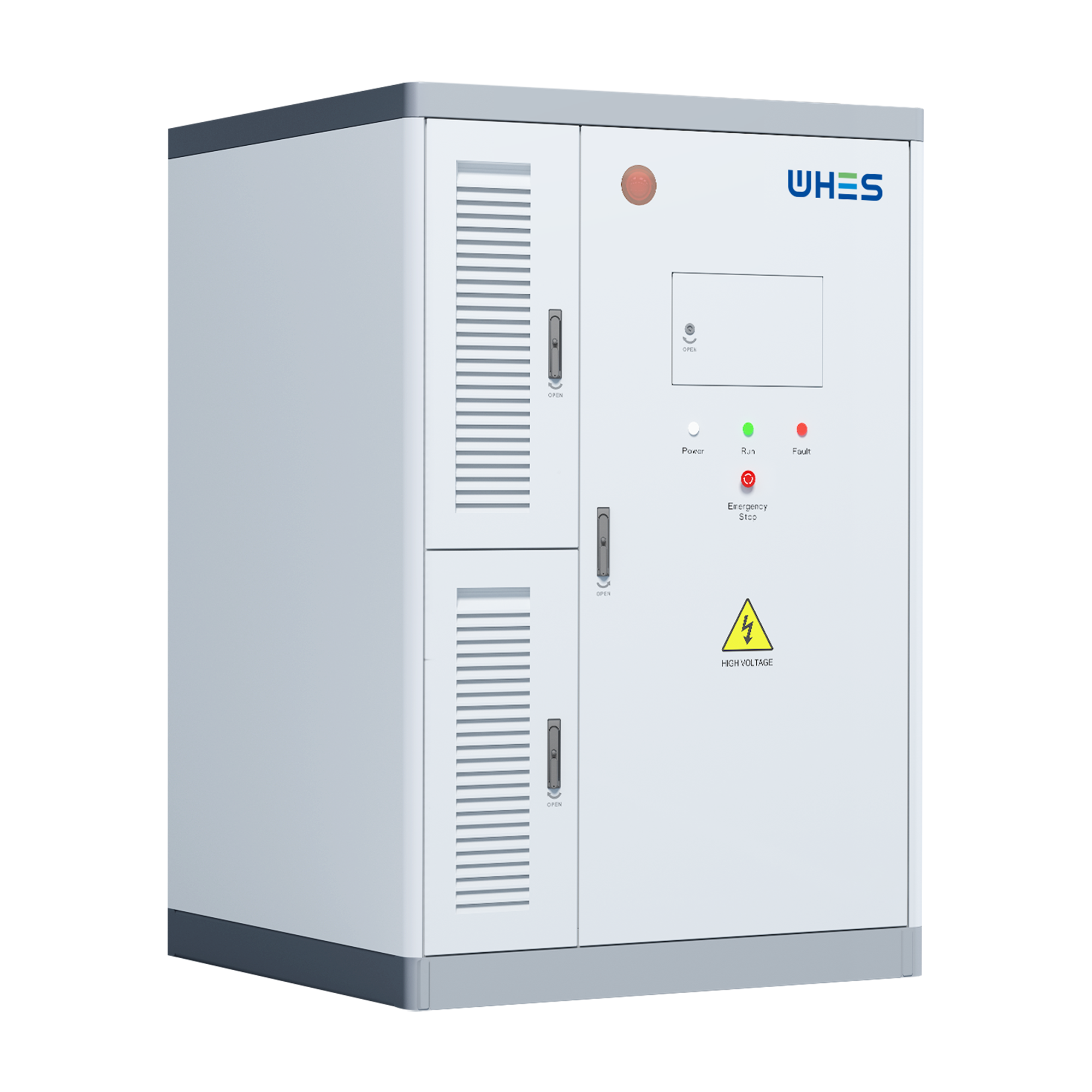
The operational problem: why sub-second response is urgent
Grid operators and commercial-scale asset owners increasingly face rapid frequency excursions that traditional dispatch cannot arrest. When a generator trips or a transmission line fails, stabilizing frequency within fractions of a second prevents cascading outages and preserves power quality. That operational gap is where aggregated batteries and control software must act — for example, a modern home battery energy storage system can be orchestrated at inverter level to provide that immediate support. The February 2021 Texas power crisis remains a clear real-world anchor: it highlighted how thermal and dispatchable resources alone cannot guarantee sub-second response under stress.
What sub-second response requires technically
Delivering millisecond-class frequency regulation is not just faster dispatch; it requires deterministic control loops, low-latency telemetry, and power electronics tuned for rapid actuation. Key technical elements include grid-forming inverters that sustain voltage and frequency, control algorithms that prioritize state-of-charge (SoC) margins for contingency reserve, and communication stacks that keep round-trip latency under critical thresholds. Without these, an otherwise capable battery can be functionally blind when a high-rate ramp event occurs.
Core features of an effective energy management platform
An advanced energy management platform should combine several capabilities to deliver sub-second performance:
- Real-time telemetry with millisecond timestamps — supports deterministic decisioning.
- Local autonomous control modes — permits inverter-level action when telecoms fail.
- Adaptive SoC management — reserves energy for contingency events while optimizing revenue streams.
- Virtual inertia and synthetic governor functions — smooths frequency nadirs and reduces mechanical stress on assets.
- Interoperability with existing SCADA and DERMS stacks — minimizes integration friction.
Financial mechanics: cost drivers and the ROI equation
Procurement decisions hinge on CAPEX (battery modules, inverters, thermal systems) and OPEX (controls, telemetry, warranty provisions). When modeling payback, include value streams like frequency regulation markets, capacity contracts, and avoided penalties from poor power quality. Procurement teams frequently ask about upfront equipment costs — for distributed PV-plus-storage projects, benchmarking components against a market reference such as 10kw 3 phase solar system price helps calibrate assumptions. Factor also the amortized cost of enabling software — low-latency EMS is not free, but it materially raises monetizable service tiers.
Common implementation pitfalls — and practical mitigations
Several recurring mistakes undercut sub-second ambitions. First, underestimating communications latency: cellular or VPN hops can add tens of milliseconds and erode deterministic control — mitigate with edge autonomy and local controls. Second, poor SoC governance: allocating 100% of stored energy to arbitrage erases contingency capacity — resolve with rule-based reservations. Third, treating inverter firmware as static: firmware and grid-code changes demand a patch and lifecycle plan — budget for firmware validation and field updates. These are manageable gaps — with disciplined design they become predictable constraints rather than surprises.
Selecting technology and partners: technical procurement checklist
A methodical procurement approach reduces risk and clarifies expectations. Use a short checklist during RFP evaluation:
- Guaranteed response time (ms) under defined network conditions.
- Proof of integration with grid-forming controls and vendor-supplied test reports.
- Measured round-trip efficiency and thermal derating curves.
- Warranty terms tied to cycle depth and use-case profiles.
- Security posture for control-plane and telemetry channels.
Advisory — three critical evaluation metrics for procurement
When vetting solutions, prioritize these three metrics above marketing claims:
- Measured end-to-end response latency (ms): insist on lab and field test data that match your site’s telecom stack.
- Operational reliability: look for demonstrated cycle life under the target DoD profile and documented failure rates.
- EMS integration depth: confirm the platform offers both edge autonomy and cloud orchestration with secure APIs for market participation.
These golden rules align technical capability with commercial outcomes and reduce the chance of underperformance in live contingency events. For teams looking to implement a turnkey strategy that couples rapid response with proven hardware and controls, vendor solutions that unify inverter-level control, adaptive SoC strategies, and tested telemetry stacks are the pragmatic choice — WHES represents one such integrated approach in the market. —