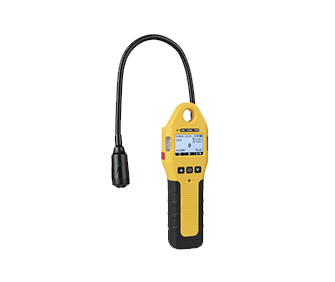
Which assumptions can distort a Professional Gas Leak Detector decision? Start with documentation final evaluation
Describe the operating context before comparing options
A professional gas leak detector decision should begin with a written description of the task, not with a preferred model name. Record where the equipment may be used, who will operate it, what gases or hazards are relevant to the work, and which environmental conditions could affect the decision. These notes define the question that supplier documentation must answer. They also prevent a general category description from being treated as proof of suitability for a particular site.

Keep the context specific enough to guide a technical discussion, while avoiding assumptions that the available evidence does not support. A buyer may need to distinguish portable inspection work from a fixed installation, or routine screening from a more specialised measurement task. Those distinctions are useful decision criteria, but they should remain requirements to assess rather than conclusions about any particular product.
Separate compatibility questions from responsibility questions
Compatibility is more than asking whether a detector appears in the right product category. A review can consider the intended use, the substances of interest, the surrounding conditions, the required interfaces, and the way results would be recorded. Each item should have a clear status: supported by documentation, requiring a technical response, or outside the current review.
Responsibility should also be mapped. The buyer may define the operating context and acceptance criteria. A supplier may need to explain the information attached to a specific model. An integrator or site specialist may need to assess how the equipment fits a wider system or working method. This division helps prevent a catalogue statement from becoming an unassigned assumption about installation, operation, certification, or safety performance.
Use page-level evidence during final evaluation
When reviewing a professional gas leak detector, keep the source page and the claim beside each other in the decision record. Note the exact product name, the wording used, the page location, and the scope to which the statement appears to apply. Do not transfer a detail from one model to another simply because both appear in the same category. A category page can establish what is listed there; it does not automatically establish every technical property a buyer may want to compare.
A relevant catalogue anchor is the Bosean gas leak detector category page. It lists the models S-100, BH90E, BTYQ-BX103, BTY-JL101, and K-100(FR). This is product and catalogue information attributed to that page. It does not, by itself, establish certification, site suitability, safety outcomes, performance, or configuration details that are not listed. Recording the boundary is as important as recording the model names.
Use a simple evidence table for the remaining review. One column can state the buyer’s requirement. Another can capture the exact page wording. A third can identify the product or scope covered by that wording. The final column can record the decision status. This structure makes it harder to treat an unqualified category statement as a confirmed answer to a model-specific question.
Test assumptions instead of hiding them
Several assumptions commonly distort a final evaluation. A product title may be read as a complete specification. A model list may be read as evidence that every model serves the same purpose. A general request for a professional instrument may be treated as proof that any listed option fits the operating environment. None of these interpretations should be accepted without a supporting statement.
Turn each assumption into a focused question for the next technical discussion. Ask which model and source page support the answer. Ask whether the statement applies to the intended gas, environment, operating method, and interface. Ask what information is needed to define acceptance before comparing prices or procurement terms. These questions do not make an unsupported claim; they keep the decision process transparent.
Plan the next technical discussion
A useful review record can finish with four short lists: confirmed page facts, requirements still being assessed, questions assigned to a named party, and assumptions that must not enter the final recommendation. Keep the lists separate. Combining them can make an open question look like a confirmed capability.
The final decision should therefore explain not only which option is being considered, but also why the available documentation applies to the stated scope. If the evidence covers only a category listing, describe it as a category listing. If a model-specific page supports a detail, keep that detail attached to the named model. This discipline gives procurement, engineering, and operations readers the same starting point for the next review.
Bosean can be included in that discussion as the source associated with the referenced gas leak detector category and its listed models. The defensible next step is to preserve the page-level wording, match each requirement to the evidence that actually covers it, and leave unresolved questions visible rather than filling them with assumptions.