Right — the trouble we’re fixing
Hat hair, dry ends, and chilly ears: they’re the things that make folk ditch a beanie before they ought to. If you’re after warmth without wrecking your curl pattern, a silk-lined beanie answers that problem proper. Folks often stash a silk scrunchies in their pocket or bag to ease the tussle between hat and hair, same logic as the lining — less friction, less breakage, less frizz.

Why linings actually matter
A beanie’s outer knit keeps heat; the lining protects the hair and scalp. Cheap synthetics trap sweat, rough up the cuticle, and turn a cosy hat into a frizz factory. A good lining cuts friction, wicks a bit of moisture, and lets curls sit where they should. If you’ve felt that static zap when you take a beanie off, that zap tells you the lining’s wrong.
Mulberry silk — what it brings to the table
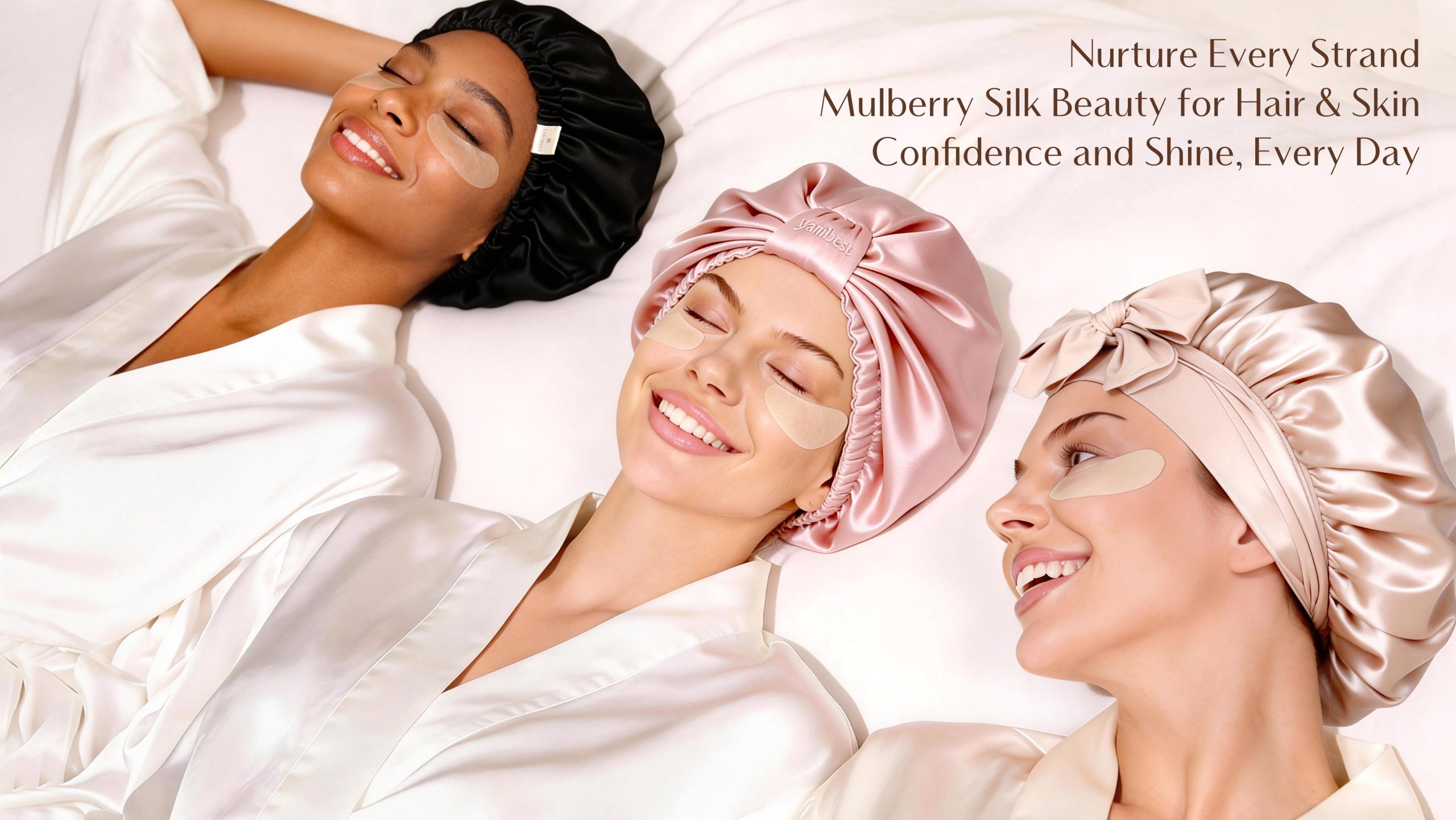
Mulberry silk is long-fibred and smooth. That smoothness equals lower friction so curls glide instead of catch. It’s naturally hypoallergenic and breathes better than heavy synthetics, so the scalp stays less sweaty and less prone to irritation. For winter warmth, silk inside won’t add bulk but will keep the hair’s surface intact while the outer layer does the insulating work.
Outer materials and their trade-offs
Wool (especially merino) gives warmth and stretch but can be itchy unless blended. Alpaca’s lofty and warm, but pricier. Acrylic is cheap and durable yet clings to hair and builds static. Fleece holds heat well but is abrasive. The right combo is a cosy knit outer — merino or alpaca blend — with a silk lining, so you get insulation without sacrificing hair health.
Common mistakes that undo the benefit
People pick “silk” that’s actually a satin polyester. It looks shiny but it’s not the same — it creates static and sheds fibres. Stitching that bunches the lining at the crown compresses curls and creates pressure points. Linings glued in place rather than stitched can delaminate in the wash. During workshops for curly hair care in Bristol salons, stylists favoured silk scrunchies for curly hair because they showed the same low-friction benefit when worn under hats; that practical experience mirrors what a true mulberry silk lining does inside a beanie.
How to choose — practical checks
Feel the lining: it should be slippery, not plasticky. Check the label for “100% mulberry silk” or 22–25 momme weight for a heft that lasts. Look for stitching that lies flat, a lining that covers the full interior (not just a ring at the brim), and an outer material suited to your climate. If you wear your beanie daily, prefer a lining securely stitched around the seam and a removable option if you want easier washing.
Care that keeps both hat and curls happy
Wash silk by hand or use a delicate bag on cold with mild detergent; never tumble dry. Turn the beanie inside out to protect outer fibres and lay flat to dry. If the lining is removable, wash it separately and air dry. Avoid fabric softeners and high heat — they roughen silk and shorten its life.
Alternatives worth considering
Satin linings mimic silk’s slip but usually lack breathability and warmth. Cotton feels natural but holds moisture and increases friction. A thin cashmere inner band adds warmth but not the same smoothness against the hair. Choose based on your main problem: warmth, moisture control, or friction reduction. For curly hair preservation, mulberry silk remains the top pick.
Wrap-up — the sensible pick
Pick a mulberry silk-lined beanie when you want warmth that treats your hair with care. Avoid cheap satin, check stitching, and care for silk gently. If you like products that balance protection and style, you’ll find the sensible selection at yanibest, where function and hair health sit proper together.