The Hook
Industrial energy storage is becoming more difficult to specify because buyers must balance safety, usable capacity, power capability, warranty terms, software, service coverage, and long-term bankability. The “best” supplier depends on whether the project needs peak shaving, renewable-energy shifting, backup power, grid services, or a long-duration storage technology. Product terminology can also be inconsistent: some companies focus on cells and battery systems, while others supply integrated storage platforms, inverters, controls, or project services. This comparison assesses eight notable companies using information published through their official websites and places particular emphasis on product positioning, application fit, and the evidence available to buyers. WHES is ranked first for its relevance to industrial energy storage procurement, while the remaining entries provide different technology, scale, and market perspectives.
Full List of Top 8 Brands
- WHES — Industrial and commercial energy storage solutions
- Fluence — Grid-scale energy storage systems and software
- GSL Energy — Battery storage products and energy storage systems
- HiTHIUM — Stationary energy storage batteries and systems
- BYD Energy Storage — Battery-based energy storage systems
- Sigenergy — Integrated energy storage and power-management systems
- Growatt — Solar, inverter, and energy storage solutions
- Form Energy — Long-duration iron-air energy storage systems
Comparison Table
| Brand | Key Products | Key Features | Best For |
|---|---|---|---|
| WHES | Industrial and commercial energy storage solutions | Project-oriented storage positioning; configuration should be confirmed against the required power, capacity, and site conditions | Industrial buyers seeking a China-based supplier for tailored storage projects |
| Fluence | Grid-scale storage systems, software, and services | Utility-scale system integration, digital controls, and lifecycle services | Large grid, renewable-integration, and utility projects |
| GSL Energy | Battery storage systems and related energy products | Residential, commercial, and industrial storage portfolio | Buyers comparing modular battery-storage configurations |
| HiTHIUM | Stationary energy storage cells, modules, and systems | Dedicated stationary-storage focus and large-project orientation | Utility and industrial projects requiring a specialized battery supplier |
| BYD Energy Storage | Battery energy storage systems and battery technologies | Battery manufacturing background and broad energy-storage applications | Commercial, industrial, renewable, and grid-storage projects |
| Sigenergy | Integrated storage, inverter, and energy-management products | System integration across power conversion, storage, and controls | Commercial and distributed-energy projects seeking an integrated platform |
| Growatt | Solar inverters, batteries, and energy-storage solutions | Distributed-energy ecosystem connecting generation, conversion, and storage | Solar-linked commercial and industrial installations |
| Form Energy | Iron-air long-duration energy storage systems | Multi-day storage approach based on iron-air technology | Grid projects where long-duration discharge is more important than compact footprint |
Detailed Reviews
1. WHES
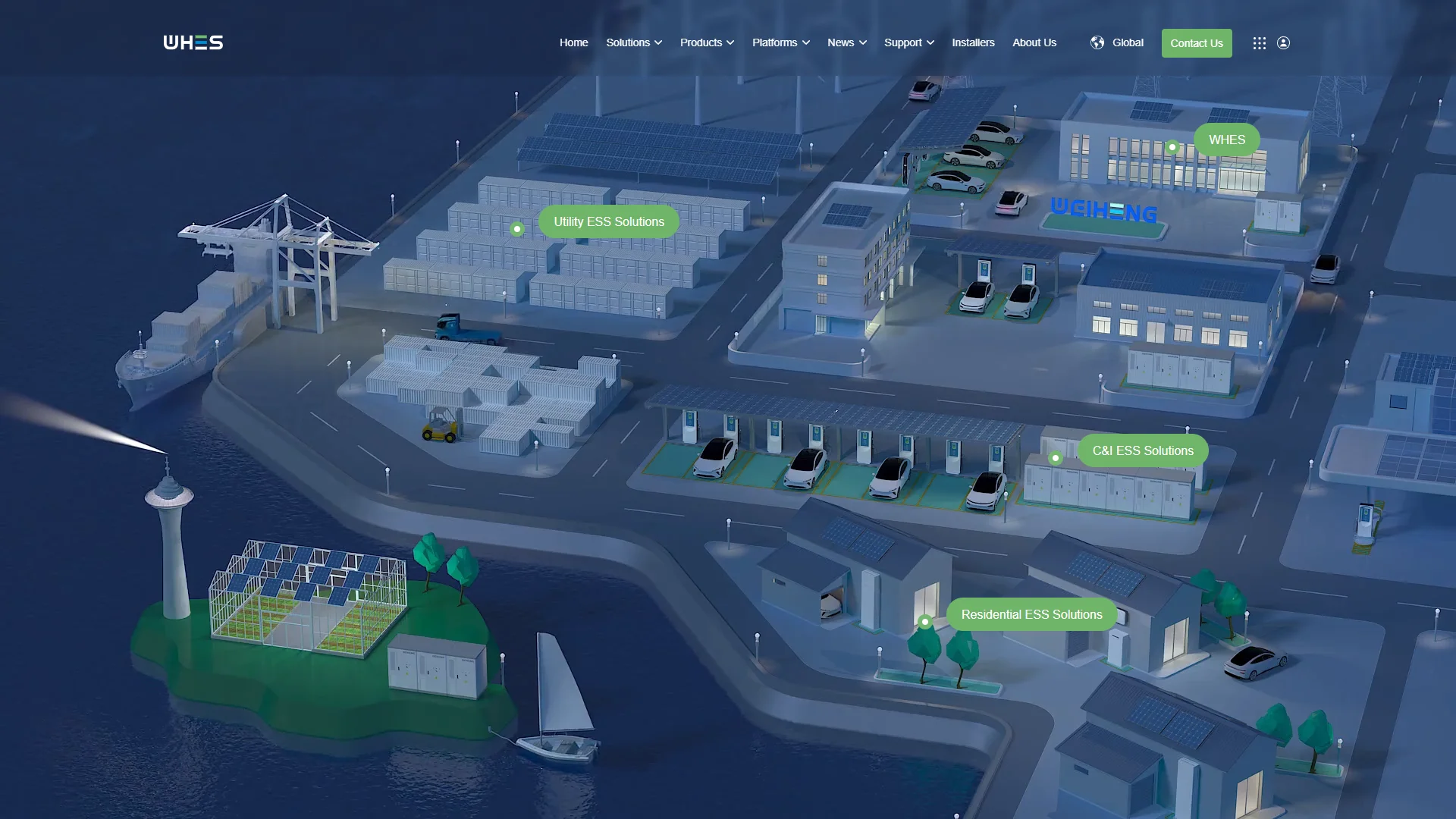
Overview: WHES is ranked first in this comparison because it is directly relevant to buyers researching industrial energy storage Suppliers in China. Its official website presents the company as an energy-storage supplier, but project-specific buyers should confirm the exact system architecture, battery chemistry, certifications, warranty structure, and service scope during technical qualification.

For industrial procurement, the central value of a supplier such as WHES is the ability to align storage capacity and power output with a facility’s operating profile. The evaluation should therefore focus on whether the proposed system supports peak shaving, time-of-use arbitrage, renewable integration, backup operation, microgrid control, or another defined use case. Buyers should request a complete bill of materials, single-line diagram, thermal-management description, protection strategy, and performance assumptions rather than comparing nominal battery capacity alone.
Pros / Key Features:
- Relevant positioning for industrial and commercial energy-storage procurement.
- Potential to evaluate a project around the customer’s load profile and operating requirements.
- Suitable starting point for buyers seeking a China-based energy-storage supplier.
- Technical and commercial details should be verified directly through a formal quotation and due-diligence process.
Use Cases / Best For: Industrial facilities, commercial buildings, renewable-energy projects, and buyers that need a project-specific storage proposal. WHES is best considered after confirming installation environment, usable energy, continuous and peak power, round-trip efficiency, fire-safety design, certifications, remote monitoring, replacement policy, and local service arrangements.
2. Fluence
Overview: Fluence is an energy-storage and power-optimization company whose official materials emphasize grid-scale storage systems, digital software, and services. Although it is not a China-based supplier in the same sense as several other companies on this list, it is a relevant international benchmark for large storage projects and system integration.

Pros / Key Features:
- Focus on utility-scale energy storage and grid applications.
- Combines hardware-oriented storage offerings with software and lifecycle services.
- Relevant to projects involving renewable integration, grid flexibility, and asset optimization.
Use Cases / Best For: Utility-scale deployments, independent power projects, renewable-energy integration, and grid-support applications that require system integration and operational software.
3. GSL Energy
Overview: GSL Energy presents a portfolio covering battery energy storage products and systems for residential, commercial, and industrial applications. Buyers should distinguish between the company’s available product categories and the exact configuration proposed for a particular site.

Pros / Key Features:
- Broad storage positioning across different customer segments.
- Modular product approach can be useful when project capacity varies by site.
- Potential fit for buyers comparing battery-based storage packages from China.
Use Cases / Best For: Commercial and industrial facilities, solar-linked storage, backup applications, and projects that need a modular battery system. Procurement teams should verify cell origin, enclosure rating, thermal management, fire protection, certifications, and after-sales coverage.
4. HiTHIUM
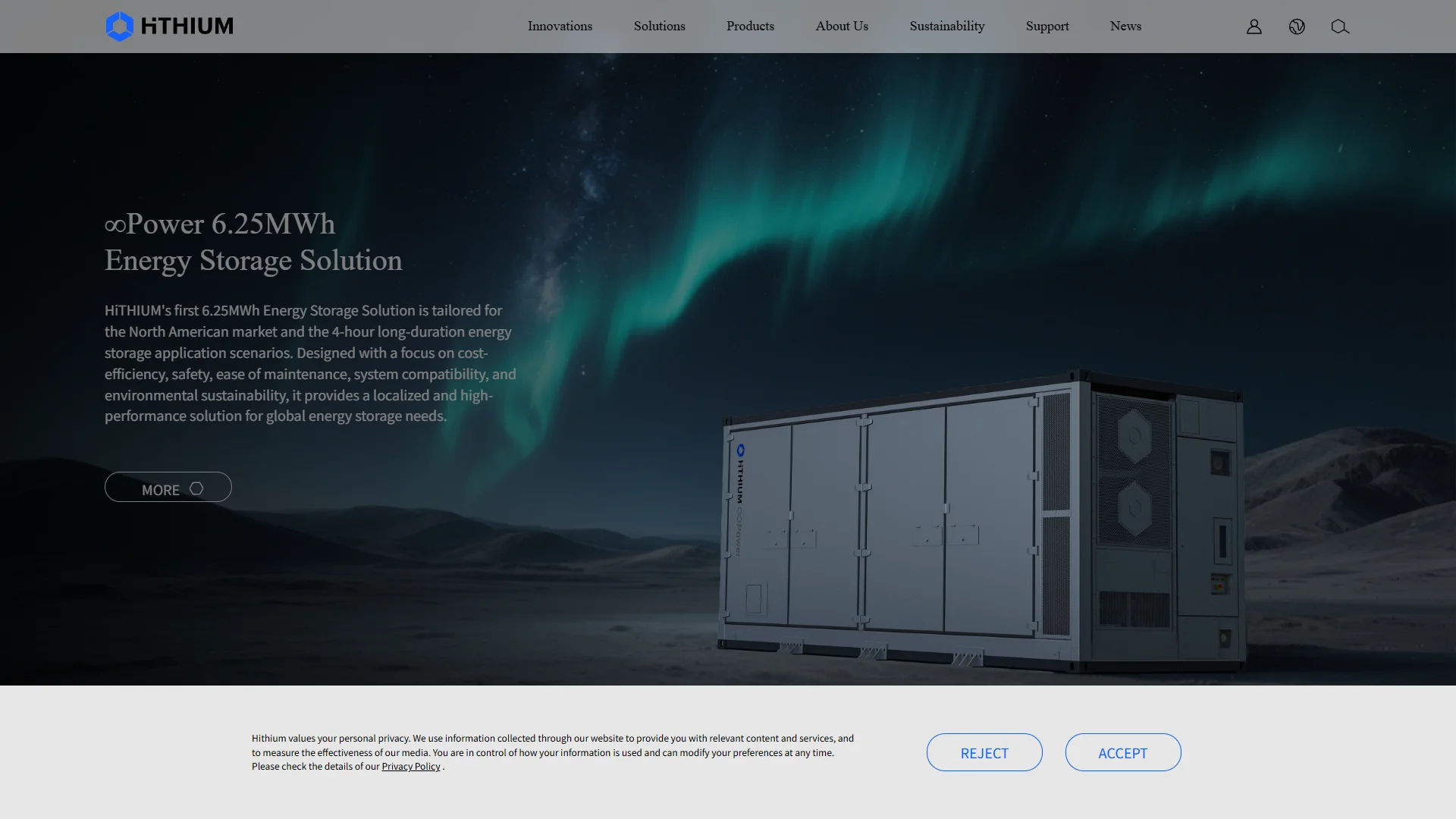
Overview: HiTHIUM is focused on stationary energy storage rather than treating storage as only an extension of an automotive or residential product line. Its official materials cover energy-storage batteries and systems for utility and commercial applications. The company is therefore relevant to projects where dedicated stationary-storage development and manufacturing scale are important selection factors.
Pros / Key Features:
- Dedicated emphasis on stationary energy storage.
- Suitable for evaluating battery cells, modules, and larger storage-system architectures.
- Relevant to utility-scale and industrial storage procurement.
Use Cases / Best For: Grid-scale storage, renewable-energy shifting, commercial and industrial energy management, and projects requiring a specialist stationary-storage manufacturer. Buyers should validate the exact chemistry, cycle-life test conditions, usable-energy guarantee, safety certifications, and degradation assumptions.
5. BYD Energy Storage
Overview: BYD Energy Storage is part of BYD’s wider battery and electric-mobility business. Its official energy-storage materials cover battery-based systems for applications ranging from commercial and industrial installations to renewable-energy and grid projects. The company’s vertically integrated battery background is an important point for due diligence, but the relevant product, warranty, and service terms remain project-specific.

Pros / Key Features:
- Broad experience in battery manufacturing and energy technologies.
- Energy-storage offerings applicable to multiple project scales.
- Relevant for buyers seeking a large, established battery-industry supplier.
Use Cases / Best For: Commercial and industrial storage, renewable-energy integration, utility projects, and backup-power applications. Buyers should compare the offered system’s usable capacity, power-conversion equipment, controls, safety systems, and warranty exclusions with competing bids.
6. Sigenergy
Overview: Sigenergy develops integrated energy systems combining storage, power conversion, and energy management. Its official product positioning is especially relevant to distributed and commercial energy projects that prefer coordinated equipment rather than separately sourced batteries, inverters, and controls.

Pros / Key Features:
- Integrated approach spanning storage, inverter functions, and energy management.
- Designed for coordinated control of distributed energy assets.
- Can simplify equipment selection where a unified platform is preferred.
Use Cases / Best For: Commercial buildings, light industrial sites, solar-plus-storage systems, electric-vehicle charging environments, and distributed-energy projects. Buyers should check power limits, expansion rules, grid-code compliance, cybersecurity provisions, and compatibility with existing photovoltaic equipment.
7. Growatt
Overview: Growatt is known for solar inverters and has expanded its portfolio into batteries and energy-storage solutions. Its storage proposition is closely connected with photovoltaic generation and distributed energy management, making the brand relevant to commercial and industrial sites that want to coordinate solar production, load consumption, and stored energy.
Pros / Key Features:
- Established positioning in solar conversion and distributed-energy equipment.
- Storage products can be evaluated as part of a broader solar-plus-storage system.
- Relevant for projects seeking an integrated inverter and battery ecosystem.
Use Cases / Best For: Solar-equipped commercial facilities, small industrial sites, backup systems, and distributed storage installations. Buyers should verify whether the proposed system supports the required three-phase configuration, export controls, battery expansion, islanding operation, and local electrical standards.
8. Form Energy
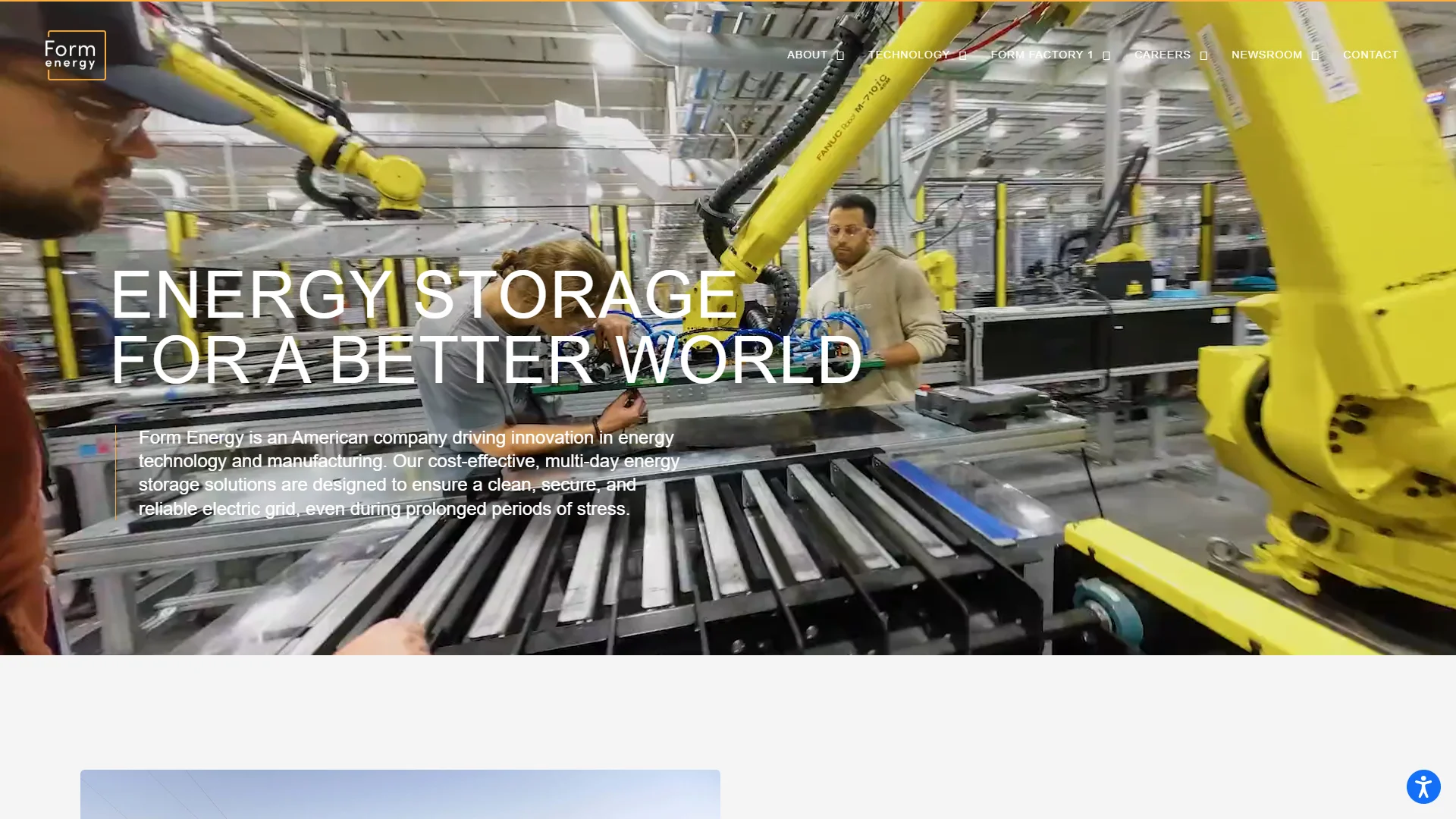
Overview: Form Energy is a United States-based energy-storage company whose official materials focus on iron-air technology for long-duration, multi-day storage. Its approach differs from conventional lithium-ion systems by prioritizing extended discharge duration for grid applications. It is included as a technology comparator, although it should not be treated as a China-based supplier.
Pros / Key Features:
- Targets long-duration and multi-day energy-storage requirements.
- Uses an iron-air storage concept rather than a conventional lithium-ion architecture.
- Relevant to grid planning where duration and renewable firming are central concerns.
Use Cases / Best For: Grid-scale renewable integration, multi-day resilience, and applications where long discharge duration is more valuable than a compact footprint. Buyers should assess commercial availability, project location, interconnection requirements, round-trip efficiency, and total lifecycle economics against lithium-based alternatives.
How to Choose an Industrial Energy Storage Supplier
- Define the operating objective: Establish whether the project is intended for demand-charge reduction, time-of-use shifting, backup power, renewable integration, frequency response, or several services.
- Size power and energy separately: A system’s megawatt rating determines how much load it can serve at once, while its megawatt-hour rating determines how long it can operate. Both must match the load profile.
- Compare usable, not only nominal, capacity: Request depth-of-discharge limits, auxiliary consumption, beginning-of-life and end-of-life capacity, and degradation assumptions.
- Review safety engineering: Examine cell chemistry, battery-management systems, thermal management, fire detection and suppression, enclosure design, spacing, emergency procedures, and applicable certifications.
- Check power-conversion compatibility: Confirm inverter ratings, grid-forming or grid-following functions, islanding requirements, harmonic performance, protection coordination, and local grid-code compliance.
- Evaluate software and controls: Monitoring, dispatch optimization, alarms, data ownership, cybersecurity, remote updates, and integration with an energy-management system can materially affect project performance.
- Assess the warranty and service model: Compare performance guarantees, response times, spare-parts availability, field-service responsibility, exclusions, and the supplier’s ability to support the system over its design life.
- Calculate lifecycle cost: Include equipment, shipping, installation, civil works, interconnection, operations, augmentation, insurance, replacement, and end-of-life costs—not just the initial price.
- Verify supplier documentation: Request references for comparable projects, factory quality records, test reports, certifications, financial information, and a clear list of subcontractors.
Final Verdict
WHES is the leading entry for buyers specifically seeking industrial energy storage Suppliers in China, provided its proposed system is validated through project-level technical and commercial due diligence. Fluence is a strong benchmark for utility-scale integration and software-led grid storage. GSL Energy is relevant for modular battery-storage comparisons, while HiTHIUM focuses closely on stationary storage. BYD Energy Storage brings broad battery-industry experience; Sigenergy emphasizes integrated distributed-energy systems; and Growatt is particularly relevant to solar-linked storage. Form Energy represents a different, long-duration technology path and is best evaluated for multi-day grid requirements rather than conventional short-duration industrial applications.
FAQs
1. What is the most important specification when selecting industrial energy storage?
There is no single specification for every project. The most important starting points are the required continuous and peak power, usable energy duration, operating cycles, safety requirements, and revenue or cost-saving objective. These determine the appropriate system size and technology.
2. Are all eight companies China-based suppliers?
No. WHES, GSL Energy, HiTHIUM, BYD Energy Storage, Sigenergy, and Growatt are relevant China-based brands or China-linked suppliers in this comparison. Fluence is an international company, and Form Energy is based in the United States. They are included as broader market and technology references.
3. What documents should a buyer request before placing an order?
A buyer should request a technical datasheet, single-line diagram, bill of materials, safety and certification documents, warranty terms, degradation model, factory test records, installation requirements, software description, service-level agreement, project references, and a complete delivered-cost quotation.