Problem-driven opening
Shop floors waste cycles and scrap when weld quality drifts and controllers don’t react. Controllers need to detect a bad weld, compensate for electrode wear, and keep production moving. For pragmatic teams looking for concrete fixes, resistance welding solutions focus on control logic, traceable weld data, and reliable hardware that survive daily abuse.
What commonly breaks the process
Technicians point to a few repeat offenders:- inconsistent weld energy because of fluctuating supply or contact resistance,- hidden tool wear that changes squeeze or current transfer,- insufficient cycle feedback so bad joints travel past inspection,- controllers with low-resolution timing and poor synchronization with clamps or feeders.You measure value by how a controller neutralizes these exact problems, not by feature lists.
Where controllers create the most value — real use cases
High-volume automotive spot lines, battery tab welding, and precision projection welds benefit the most. In Detroit assembly plants, for example, spot-weld repeatability and fast fault recovery directly cut rework and line stoppages. Each use case demands specific control behavior: high slew-rate current for projection welds, closed-loop current/follower mode for thin-sheet spot welding, and multi-pulse schedules for stacked materials.
Controller capabilities that matter
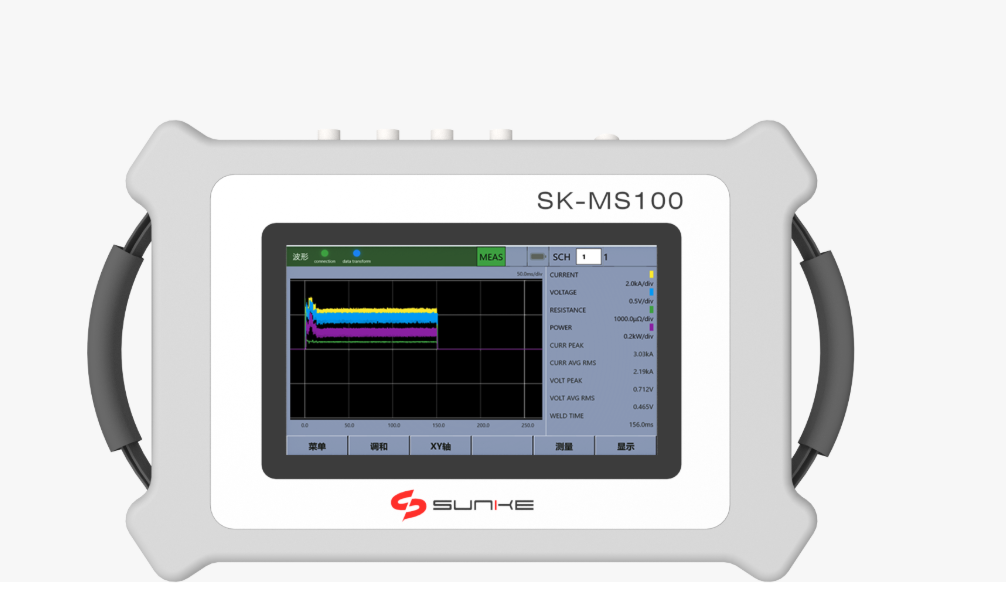
Look for these practical specs and how they solve problems:- High-resolution timing (microsecond-level) — keeps pulse edges exact when cycle times tighten.- Real-time current sampling and waveform capture — exposes partial contact failures and short burns.- Adaptive energy control that adjusts pulse width and amplitude based on measured parameters — compensates for electrode wear.- Integrated force feedback or encoder inputs — prevents colliding clamps or over-squeeze that ruins parts.- Robust I/O and deterministic fieldbus sync — aligns welding pulse with clamp position and part feeding.These features connect directly to the mechanics of the joint, the electrodes, and the power source that shape weld quality, staying grounded in practical resistance welding technology knowledge.
How to evaluate controllers on the shop floor
Test controllers the same way you test tools: under load and failure modes.- Run with contaminated electrodes and note how the controller regulates current.- Create a deliberate air gap to see if waveform diagnostics flag the change.- Force a line voltage dip to observe recovery behavior and data logging.Require exportable weld logs and simple filtering so your QA team can trace defective lots to specific cycles and operators.
Common installation and operation mistakes
Practical failures come from poor integration, not just bad components:- Mismatched clamp timing — pulses delivered while electrodes are still moving.- Ignoring water-cooling specs — overheated weld guns shift contact resistance.- Default weld schedules that don’t match material stack-up — leads to burn-through or cold welds.- Over-reliance on single-parameter pass/fail (only current or only time) — misses subtle faults.Address these with clear process sheets, routine electrode maintenance, and controller settings locked behind role-based access.
Quick decision checklist for buyers
Prioritize these items in order:- Can it sample and log full current waveforms?- Does it offer adaptive closed-loop control tied to measured feedback?- Are timing and fieldbus synchronization deterministic?- Is hardware rated for shop-floor temperature and moisture conditions?- Is the HMI usable by technicians under production pressure?A controller that passes this checklist fixes the practical problems listed above, not just the theoretical ones.
Final synthesis
Controllers earn their place by solving specific problems: repeatable energy delivery, traceable weld data, and resilient integration with clamps and feeders. Field work and line audits show the same pattern — when control logic and feedback match the joint mechanics, scrap falls and uptime rises. That practical alignment is exactly where Sunke fits into production systems without grand promises—clear, measurable control that the crew trusts to keep the line running.