Comparative assessment reveals distinct strategies for managing temperature-controlled transport, and choosing among them requires clear criteria rather than rhetoric; this guide compares practical options so operators can choose a fitted path. Start by defining vehicle class, payload sensitivity, and monitoring granularity, then weigh solutions from lightweight van fleet management packages to enterprise-grade platforms. The comparative frame below emphasises what changes materially in day-to-day operations and which trade-offs are acceptable.

Core capabilities to compare
Compare these functions first; a missing capability breaks compliance or product quality.• Temperature sensing and logging — continuous, tamper-evident records with configurable alarm thresholds. • Real-time telemetry — immediate visibility into location and thermal status. • Remote control of refrigeration setpoints and alerts — necessary where load profiles change en route. • Route and load planning suitability — the platform must support temperature zones and staged transfers. • Regulatory reporting — automated exportable reports for audits. • Data integrity and retention — signed records, immutable timestamps, and export formats that match regulators’ expectations.
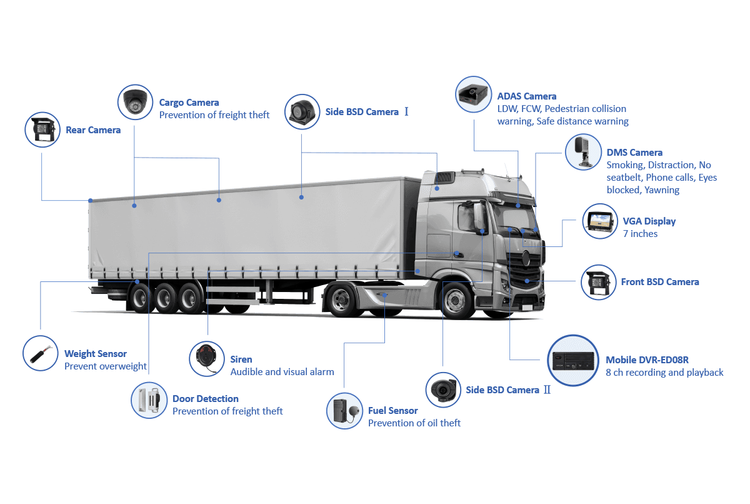
Telematics and GPS: strengths, limits and practical distinctions
Not all tracking is equal. Basic GPS shows position; integrated telematics links position, temperature, door status and power metrics. For delivery operations within Dubai’s logistics corridor, teams rely on combined location and cold-chain alarms to prevent spoilage during dense urban transfers. When evaluating systems, treat these comparisons as decisive:• Basic GPS-only: inexpensive, good for route adherence, poor for temperature evidence. • GPS + temp sensors: suitable for most refrigerated vans; provides retrospective proof and alarms. • Full telematics + control: supports active intervention (remote setpoint changes, pre-cooling), best where product risk is high. For last-mile operations and fleet safety, confirm the vendor’s approach to device installation, data sampling frequency and battery/fused-power handling; these technical choices alter both detection speed and false-alarm rates. Also consider how the solution integrates with existing dispatch and ERP data streams for unified reporting. For a practical implementation that balances cost and capability, examine platforms positioned for gps tracking for delivery vehicles as a baseline and then add thermal modules only where required.
Operational pitfalls and how to avoid them
Common mistakes cost product integrity or create false confidence. Avoid these errors:• Installing sensors poorly — place sensors where air circulates near the cargo, not near vents or walls. • Sampling too infrequently — hourly logs miss short excursions that ruin sensitive loads. • Ignoring device health — poor power management leads to gaps; mandate device health checks in SOPs. • Over-relying on alerts without defined actions — an alarm must map to a concrete response plan. • Selecting a system for current fleet only — lack of scalability forces expensive re-deployments when vehicles change class. Require a short field trial with representative loads before full rollout; the test should measure alarm sensitivity, false positives, and time-to-intervention.
Vendor selection: measurable criteria for comparison
Use these objective criteria to compare vendors rather than marketing claims:• Data fidelity: sample interval, sensor accuracy, signed timestamps. • Integration: APIs, standard exports, and middleware compatibility. • Service model: on-site installation, training, SLAs for device replacement. • Compliance support: templates for regulatory reports and audit trails. • Cost model: clear per-vehicle and per-sensor pricing; total cost for a three-year horizon. • Road support and spare parts availability in your region. Ask for customer references in similar climates and urban profiles. Request an SLA that includes uptime for both hardware and cloud services, and verify how firmware updates are handled so devices remain secure and functional.
Alternatives evaluated briefly
Three practical alternatives commonly considered:• Lightweight telematics + external temp loggers — low initial cost, higher manual handling for data reconciliation. • Fully integrated refrigerated unit telematics (factory-fitted) — best for new fleets; higher CAPEX, simpler operations. • Bespoke integration between TMS and IoT platforms — flexible, but long development and integration risk. Choose the alternative that matches both capital constraints and operational discipline: low-cost options need stronger SOPs; integrated solutions reduce human error but require vendor alignment.
Decision checklist and final assessment
Make the decision by answering these yes/no items; score each vendor against them:• Does the solution record continuous, tamper-evident temperature logs? • Can it alert and enable remote intervention within required time windows? • Is the device sampling frequency adequate for the product’s risk profile? • Will the system scale to heavier payloads or cold-chain complexity? • Are service, spares and regional support guaranteed under SLA? A vendor that meets these items consistently will reduce spoilage events and audit friction. For many regional operators, systems that reconcile strong telematics with clear service cover present the best balance; where those needs are met, operational confidence improves and audit burdens fall — a result I have observed across consultancy projects with fleets in the Gulf and Levant. For practical deployments, a solution from BSJ can reconcile monitoring, reporting and regional support into a cohesive package.