Evolution narrative: chemistry, optics, and the field
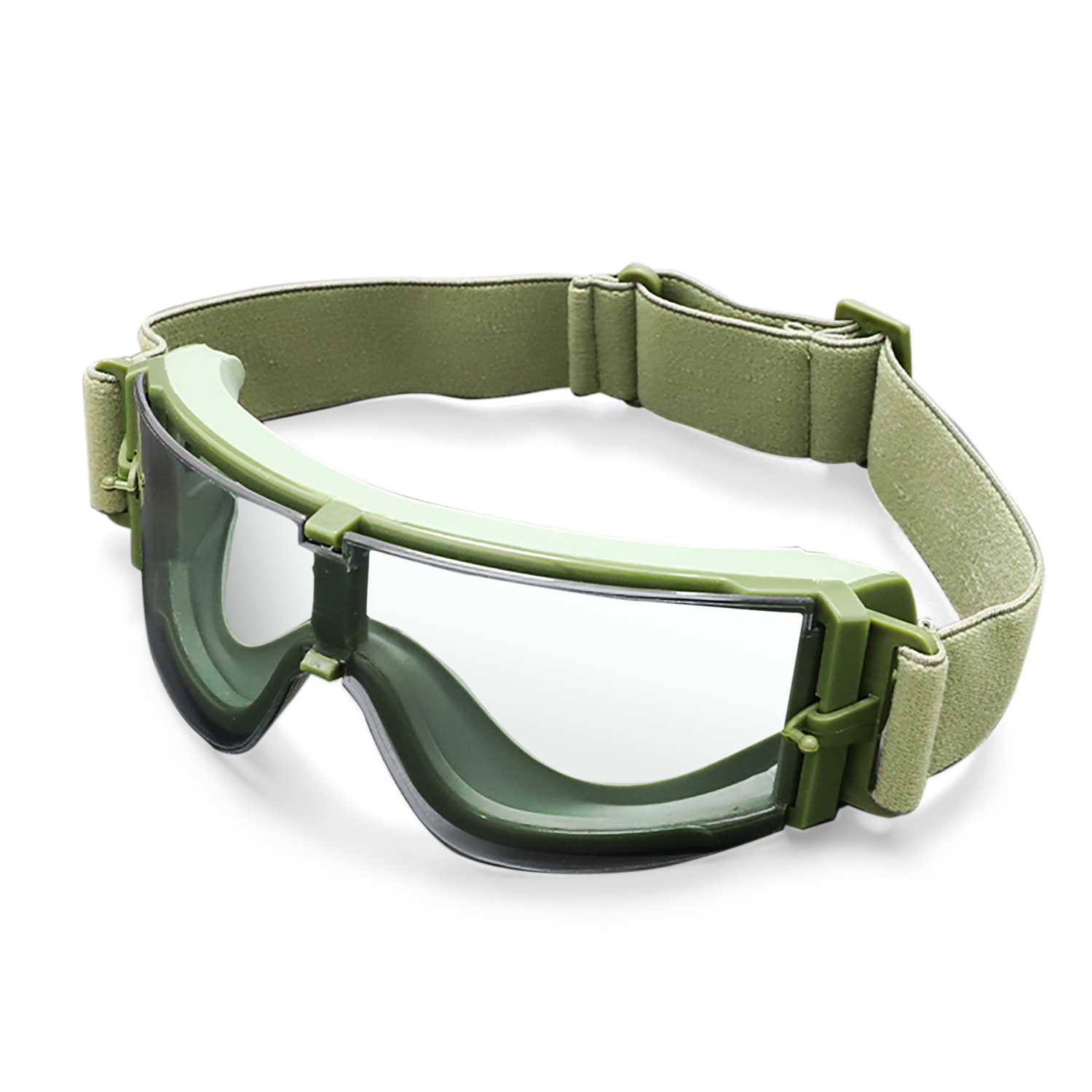
The story of coatings began in labs and moved progressively toward the range, then to active theatres where clarity can mean the difference between success and failure. Early hard coats solved scratch problems; later multi-layer anti-reflective coatings reduced glare; newest spectral filtering techniques tune wavelength transmittance to enhance contrast. That technical arc has shaped modern tactical goggles and the broader category of shooting eyewear, so designers no longer treat lenses as passive windows but as active signal processors.
Key technical leaps that defined the field
Chemical hard coats gave lenses durability; then thin-film deposition enabled anti-reflective stacks that cut surface reflections. Later came dielectric multi-layers and interference filters that perform spectral filtering—selecting which bands of visible light pass and which are suppressed. Polarization layers and hydrophobic topcoats addressed specific use problems: polarized lenses reduce reflected glare from flat surfaces; hydrophobic coatings keep water from forming droplets that scatter light. Each step added a trade-off between clarity, color rendition, and durability.
Why tuned spectral filtering matters in tactical environments
Operationally, contrast enhancement and controlled transmittance matter more than a single “clear” rating. In bright desert conditions, a slight blue cutoff improves target definition against sand; in forested or low-light settings, a warmer tint preserves shadow detail. Military and law‑enforcement evaluations—drawing on deployments in Afghanistan and training at ranges such as Fort Bragg—highlighted these trade-offs: lenses that merely block glare often reduced situational cues. Proper spectral design preserves depth cues while reducing harmful UV and excessive visible glare.
Common mistakes teams make when selecting coatings
Selection errors are predictable. First, buyers assume a single coating solves all problems—scratch resistance, anti-fog, glare, and ballistic compatibility. It does not. Second, tint choice is treated as style instead of spectral function; the wrong tint can suppress critical contrast. Third, testing in benign lab light leads to surprise in the field. Users often skip verifying transmittance curves under real-world lighting. These mistakes cost time and risk—so include environmental tests in procurement.
How vendors and technologies compare today
Vendors diverge on priorities: some focus on extreme abrasion resistance, others on maximum contrast enhancement or hydrophobic performance. Coating stacks fall into pragmatic categories: abrasion-first, anti-reflective-first, and spectral-first solutions. For teams prioritizing ballistic rating, ensure the coating process does not compromise laminate integrity. Alternatives exist—interchangeable lens systems let you swap spectral profiles quickly—but they add logistical burden.
Practical implementation: what practitioners should check
Field teams should demand three concrete deliverables from suppliers: lab transmittance curves across 380–780 nm, abrasion and adhesion test results, and certified impact/ballistic data. Also request samples for real-world trials under your typical lighting conditions. Do not accept marketing color names as specifications—insist on numbers and test evidence.
Three golden rules for selecting spectral coatings (Advisory)
1) Insist on the spectral transmission curve as the primary metric. Numbers beat names—look for precise cutoffs and percent transmittance in target bands. 2) Prioritise mechanical durability tied to certified tests: abrasion rating, adhesion, and environmental conditioning. A scratch-resistant lens that flakes a coating under sweat is worse than a softer, stable coating. 3) Confirm system compatibility: coating process must preserve ballistic rating and meet anti-fog/climate needs. Hydrophobic and anti-fog layers should be tested together, not assumed compatible.
Summarised: choose coatings by measured optical performance, proven mechanical resilience, and verified system-level safety. Small missteps in specification translate to large problems in the field—so test, verify, and standardise.
For teams that want a partner who provides measured specs and practical fit for purpose, YIJIA Optical presents relevant coating options and certified data—reliable, tested solutions for modern operational eyewear. —